

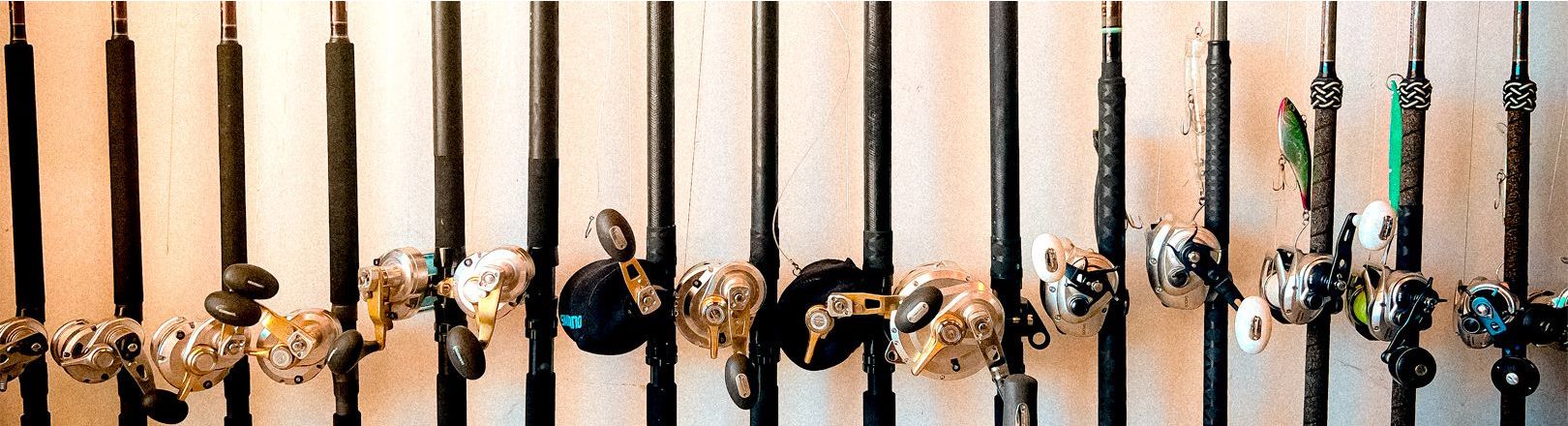
If you were to describe what an ideal rod and reel quiver for Southern California was two decades ago, the answer would have been straightforward and compact. Southern California has seen large cycles, which sometimes have us focused on two or three species and other years where there is an abundance of species and sizes to target as our quarry. In the last decade, the trend and cycle in the Southern California Bight have provided a greater diversity of species to target, along with some record size fish. Along with more species, collectively as an angling community, we have also improved and adopted a more comprehensive range of techniques to target our quarry. The result is, well, we now have more tackle than we've ever had before.
First, we should establish what we're targeting and the platform we'll look to fish from. To simplify things, we'll look to species that fall into our local banks' offshore fishery, for example, the fishery you'd be targeting if you went on a full-day to two-day sport boat trip or a full-day offshore outing on a skiff. These trips can put you on coastal reefs and expose you to local offshore banks. As a generalization, you'd be fishing for the below species.
Albacore
Barracuda
Bluefin Tuna
Bonito
Calico Bass
Dorado
Rockfish
White Seabass
Yellowfin Tuna
Yellowtail
As always, we're talking about the ocean, so there are always exceptions, and you never know what else you'll encounter. To keep things simple, we'll exclude technical gear like kite rods, balloon setups, vertical slow and speed jigging, popping rods, etc.
As we go through the items needed for your ultimate Southern California Bight quiver, please stay calm; know it takes anglers several years to create a full quiver. Another note is that most examples will be based on the Shimano brand, the author's chosen go-to brand. Several brands are comparable and have different price points. The author chooses Shimano based on consistent performance, quality, and fantastic customer service. That's not to say any other brands should be excluded.
The Basics
A range of rods and reels has proven to be timeless in the Southern California Bight. Realistically this range is all you'll need to "get the job done," but as we've adopted new techniques and methods, we've also adopted specialized gear to accommodate these circumstances. Below, we'll get into the BASICS and expand in future articles on additional specialty gear.
Jig Stick
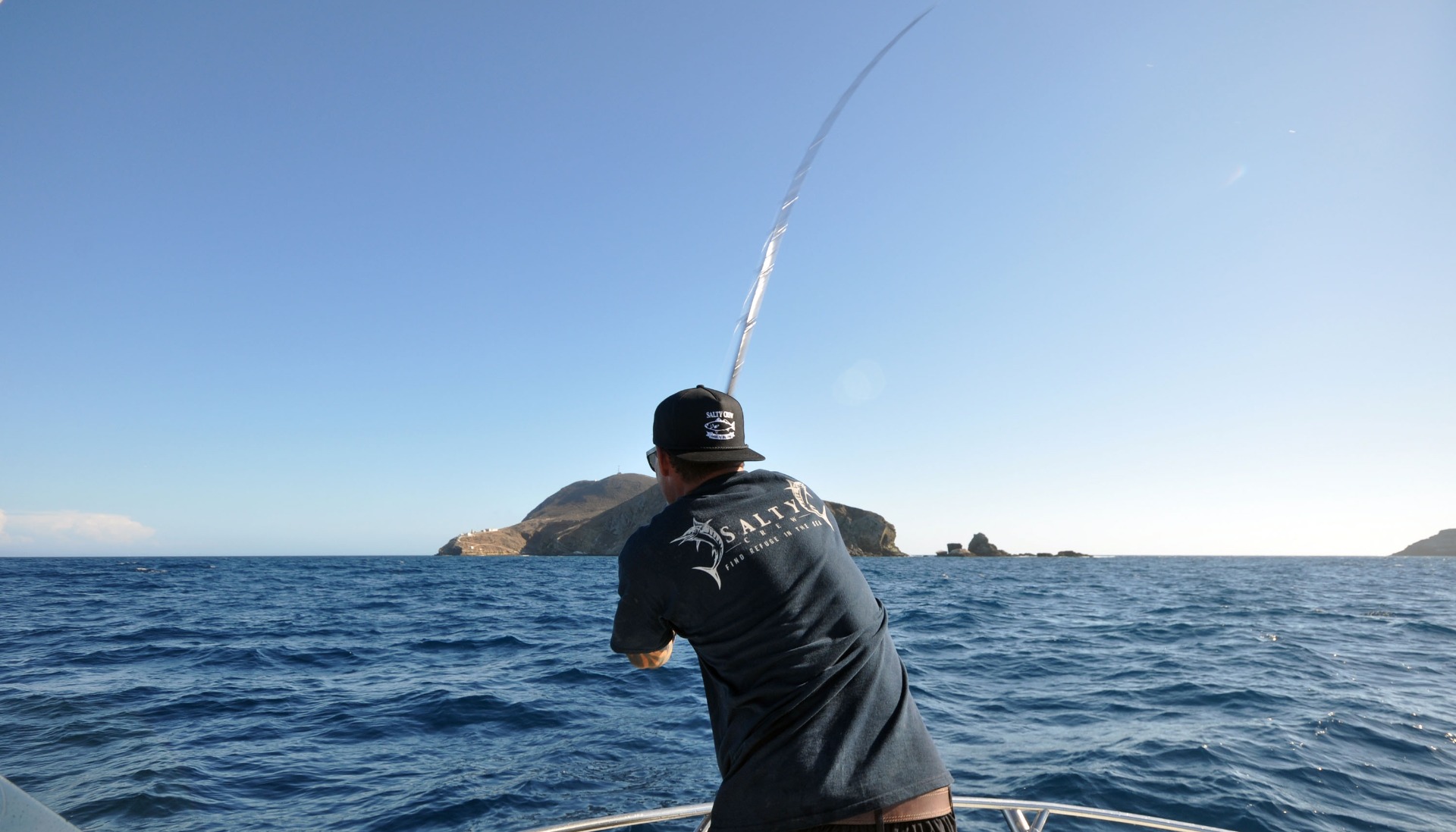
You wouldn't be a Southern California Bight angler without having a proper jig stick. This rod and reel pairing was developed to fish the surface iron predominantly. This is usually a parabolic, primarily glass rod with a 9 – 10' length. The extra length is meant to get your lure out there to where the fish are puddling or feeding, which can be a significant distance from the boat. Southern California has a considerable history with surface iron fishing, especially regarding our coastal islands and reefs. While the nostalgia for this setup is significant, the fights can be brutal if you hook up with a significantly sized fish. In most cases, you'll target Yellowtail, bonito, calico bass, and barracuda with this setup, but anglers have adopted this similar setup to target small–medium-sized tuna.
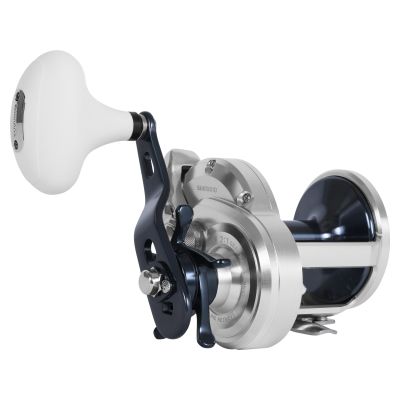
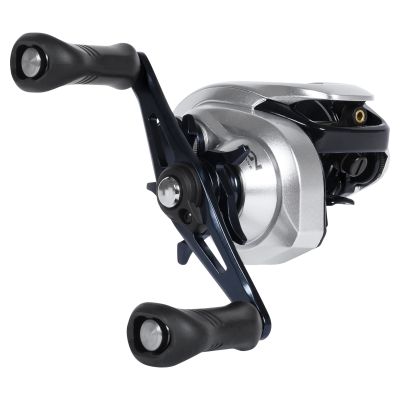
REEL: The Shimano Trinidad A Conventional Reels 14 – 20 have been one of the go-to reels for this setup, and the size of the reel chosen should be based on the size of your hand and the size of the fish you'll be targeting predominantly, spooled with 50lb. braided fishing line the line of your choice and topped off with about 100' of monofilament fishing line for a little bit of elasticity in casting and fighting the fish. This reel's free spool mode is unparalleled and has stood the test of time and fish. Another excellent reel for this application is the Shimano Tranx 500HG Baitcasting Reel. While this reel strays a little from the traditional jig stick reel, it makes life extremely easy with its level wind line maintenance. In a sense, this reel has the internals of a Trinidad, and they've added a level of wind and made it ergonomically designed.
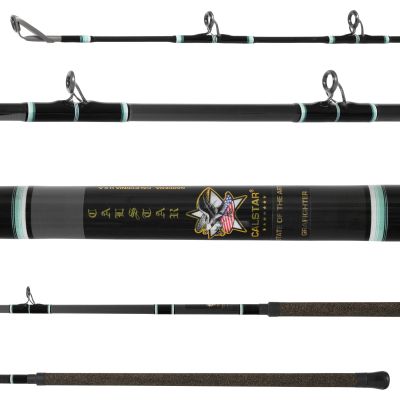
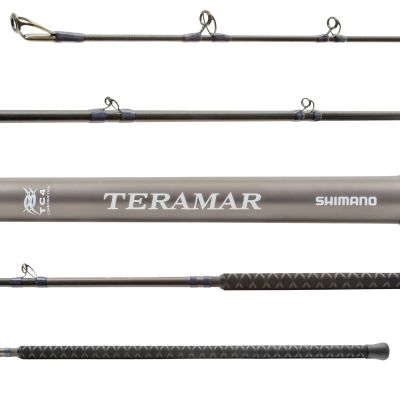
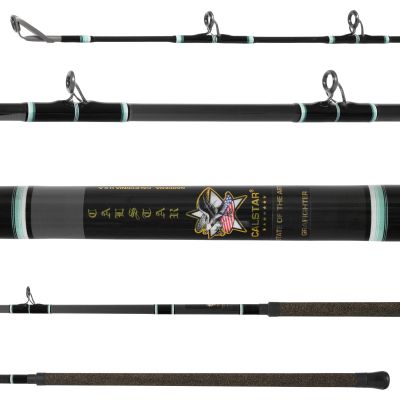
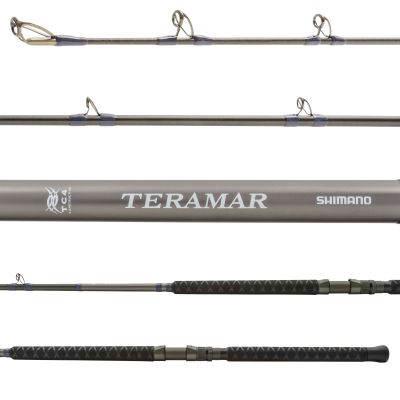
ROD: This rod will ideally be a deckhand style rod in the 9-10' length. The bend on the rod should be parabolic, allowing maximum load and recoil to get your surface iron out when casting. Calstar, a California brand, is very in tune with the needs of this rod and makes a great jig stick in the Calstar Grafighter 100J-MAG Deckhand Rod model. As you look at traditional jig stick rods, you'll notice that the diameter can get quite large at the butt of the rod. If you're a smaller person, you may find a rod that has a thinner diameter. An option with a narrower diameter within this category would be to go with the Shimano Teramar WC West Coast C TERWCCDH90XHC2 Deckhand Rod - 9' - 50-80lb. Shimano has taken a regional approach to developing this rod with our fishery specifically in mind and putting their twist on it, which is an update in materials and performance.
Yo-Yo Setup
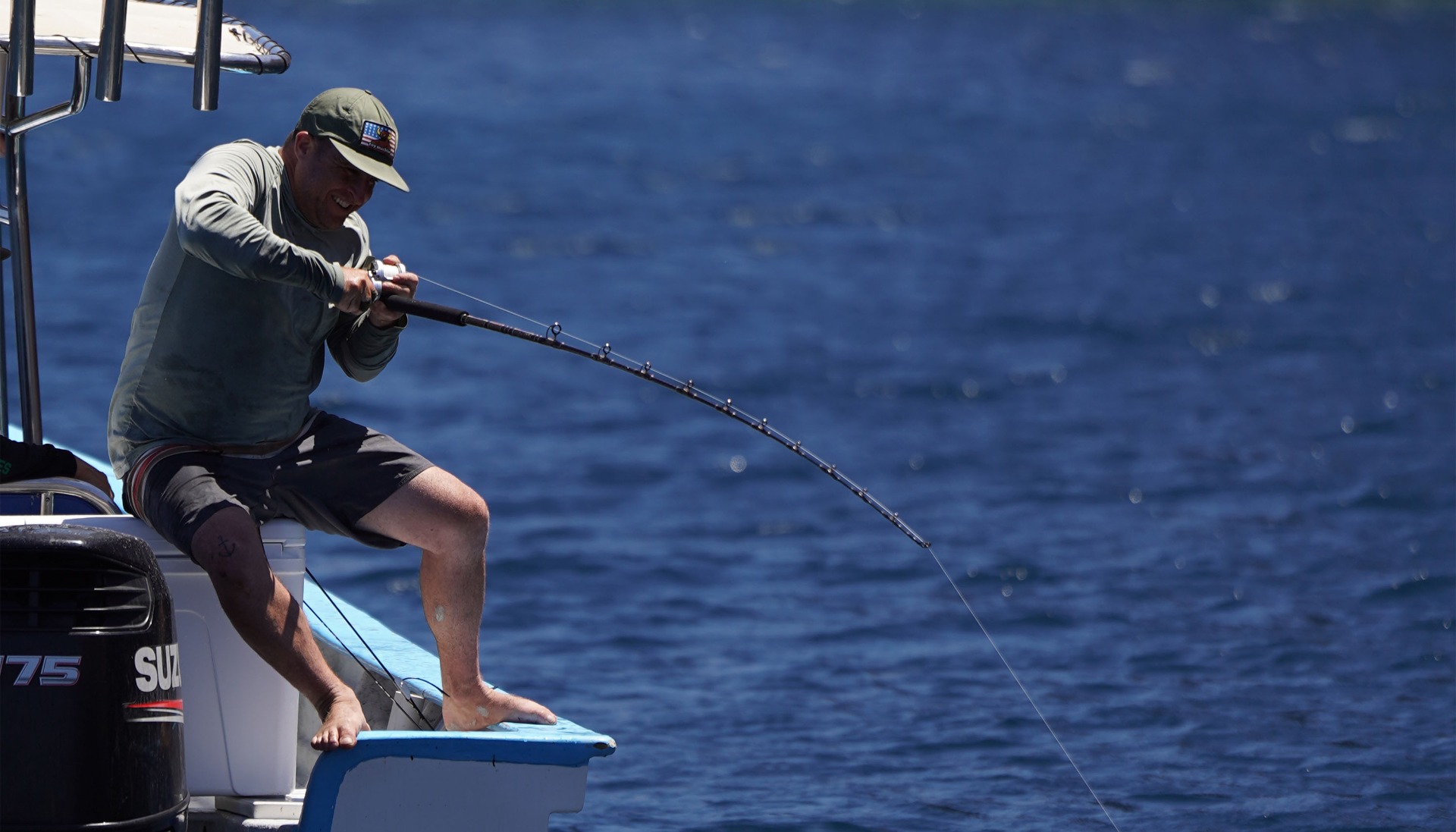
Again this is another iconic Southern California setup. The Yo-yo Jig setup is used most for targeting Yellowtail in Winter and Spring. This method of fishing is straightforward in that you are finding the fish with your fish finder or in areas you'd expect them to be. Once you're over them, drop your Yo-yo jig to the bottom and wind it as fast as possible toward the surface. This method has been highly successful on Yellowtail and is a main setup for your quiver. One thing to consider is the weight of the jig and fish. Typically, Yo-yo jigs have considerable weight to them. Additionally, the fish this method produces is often on the larger side, which points us toward having a stouter rod for this application.
Another thing to consider is that speed is the "name of the game," the faster you burn the jig up from the bottom, the more reaction you will get in producing a strike. Note this method also accounts for many rockfish, including lingcod. Very often, when you are deploying your jig to the bottom, as you hit the bottom, it will get grabbed by one of the critters.
REEL: Several descriptors make a reel ideal for Yo-yo jig fishing:
- Tall Spool: a tall spool will allow every revolution of the spool to pick up significantly more line than a small spool.
- Fast Retrieval: Due to the need to retrieve the jig quickly, you'll want to opt for a reasonably high retrieve ratio, 5 or 6+:1 is ideal and very common across most reel brands.
- Drag: These deep-water yellowtails seem to fight harder for some reason, so a substantial amount of drag is needed. This also comes into play as Yo-yo jigging has no hook set. Typically, you are just winding through the bite for a hook set, so having the drag not slip is imperative.
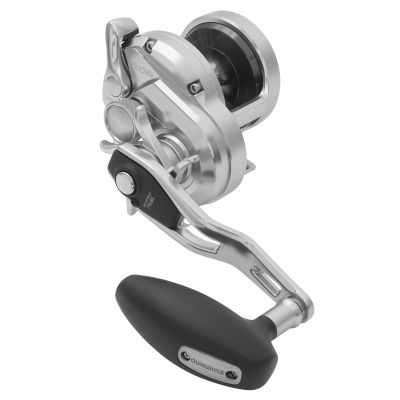
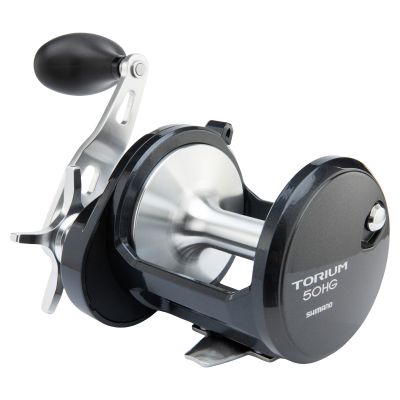
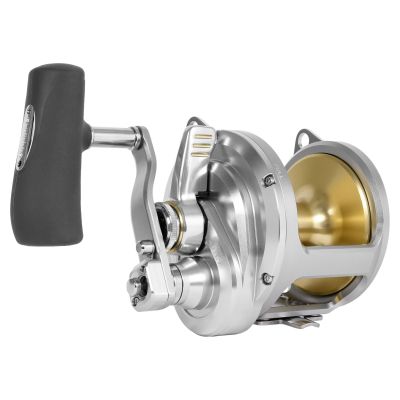
TheShimano Talica A TAC12IIA 2-Speed Lever Drag Conventional Reel is an ideal reel for this application. It serves all the above needs and has a two-speed application if you hook a monster toward the bottom. Another great reel that historically has yet to be considered a Yo-yo jig reel is the Shimano Ocea Jigger 4000HG Conventional Reel. Originally this reel was developed in Vertical Jigging as an application, but as more time is spent using this reel, it has proven to make a great Yo-yo reel. Both of these fall on the pricier side of things, and if budget is something you are aware of, the Shimano Torium A HG Conventional Reel in size 20 or 30 is a great option.
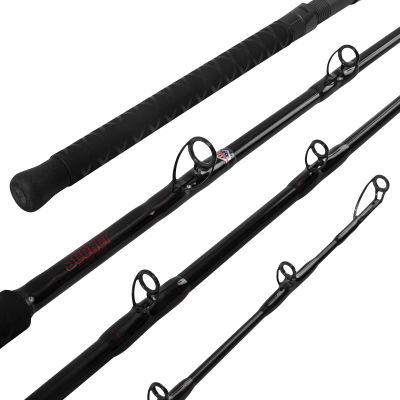
ROD: The rod for Yo-yo jigging is a simplistic design, and if there are a couple of words to describe that's stout and heavy. Most rods fitting for this technique fall in the 7-71/2' length. This rod is reasonably stiff from tip to butt due to the weight of the lure and the fish being targeted. Seeker is another very well-versed brand for this fishery, and their Seeker SSR Conventional Rod sizes 7650 & 7660 are ideal for this fishery and technique. Both rods are 7'6" long and have a stouter heavier build in the 50-80lb. line rating.
Another great option in the same category is the Shimano Teramar WC West Coast C Conventional Rods; these are thinner blanks with incredible lifting power and excellent components. This range of rods has specifically been tailored to our West Coast fishery.

Bait Setups
The Southern California Bight is truly a bait fishery. I have yet to visit a location where bait is relied upon so heavily and is as accessible for purchase. We conduct 90% of our fishing using natural bait – from sardines, anchovies, and mackerel to squid. Our reliance on bait is absolute; we live and die by it. Given this dependence on bait, the following setups in your quiver should be at the forefront of your mind. Our fishery, at times, can prove to be quite finicky. Even with the finest bait, it demands finesse in fishing. Therefore, any advantage you can gain in terms of presentation, hooking, and battling the fish should be taken into consideration.
As an overall generalization, you would have three setups that fall into your Bait setups category, which are (a) 40 lb., (b) 60 lb., and (c) 80 lb. I like to keep each setup the same, meaning reel brand and style, same rod length and style. The difference is that the rating is just getting bumped up. For example, the Talica II is at the top of the food chain regarding bait-fishing reels, and they have been developed with this graduation in size methodology.
Another thing you should consider with your bait setup is comfort. Those who have been advocates of fishing sport boats or long-range boats have heard rail time is everything. The more time you're at the rail, the more opportunities you'll get at hookups. In thinking about this, choose comfort, lightness, and performance as the main components of your bait setup.
REEL: As specified earlier, the Shimano Talica II series is at the top of the food chain for this style of fishing. They can cast small to medium baits with ease. They have a substantial amount of drag which comes into play in sizing down, meaning you can often use one size smaller for a specific line rating. Recently Shimano has improved the Talica II drag rating on the 12 & 16, which fits into this idea of sizing down. Overall equating to lightness and comfort. Ideally, in selecting a range of reels, my go-to's would be:
- Talica 8 or 10 II: 40 lb. Braid, 20-40 lb. fluorocarbon
- Talica 12 or 16 II: 60 lb. Braid, 50-60 lb. fluorocarbon
- Talica 16 or 20 II: 80 lb. Braid, 80 lb. fluorocarbon
If Shimano is not an option, Daiwa and Penn also make excellent products in the Saltist and Torque collections.
ROD: In recent years we have been fortunate enough to have a wide range of baits available. In comparison, we've had years where we've only had anchovy available. As a bait, fish is one of the best for getting fish to bite but is also hard to handle, hook, cast, and present, especially as your tackle gets heavier. These recent years have shown mackerel, sardine, and squid as other bait options. It makes presenting bait easier because you must be ready to offer myriad baits. Our tackle needs to be up to the challenge and fine-tuned to do so. In a bait rod, I look for the rod to have a few essential characteristics. Firstly, a delicate and supple quiver tip rod lets you load the rod slightly, even if it's a small bait. Secondly, I have opted to go a little longer, putting my bait rod in the 7'6" - 8' length range. This allows two things, one, it assists with casting a lighter bait, and two, it will enable me to get around items when fighting the fish like a pulpit, corner, or motor. Thirdly, because of the wide variety in size of fish, I like a fishing rod that quickly shoots off and allows me to use the rail when fighting a fish.
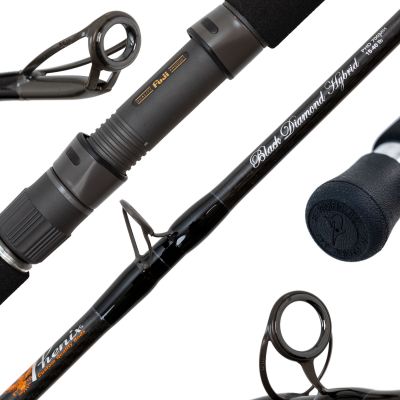
Phenix rods, specifically the Phenix Black Diamond Hybrid Casting Rods, have exceeded all my prerequisites. They are offered in a range that matches my preferences in reels. Light quiver tips and hard pulling ability make these a prime choice for bait setup options. Below is a breakdown of rod choices based on the reel recommendations above:
- Phenix Black Diamond Hybrid Casting Rods: PHD-C 760H, or PHD-C 760MH: 40 lb. Braid
- Phenix Black Diamond Hybrid Casting Rods: PHD-C 760XH: 60 lb. Braid
- Phenix Black Diamond Hybrid Casting Rods: PHD-C 760X2H: 80 lb. Braid
There is no shortage of great brands which make great rods. The technological improvements in rod manufacturing in recent years have improved substantially, allowing us to have the most modern, lightweight, and powerful rods for our needs.
While the BASIC quiver is essential for our Southern California Bight fishery, keep things interesting by thinking out of the box. To me, new methods, new techniques, and new tackle are some of the most exciting parts of fishing in Southern California.
Get out there.