

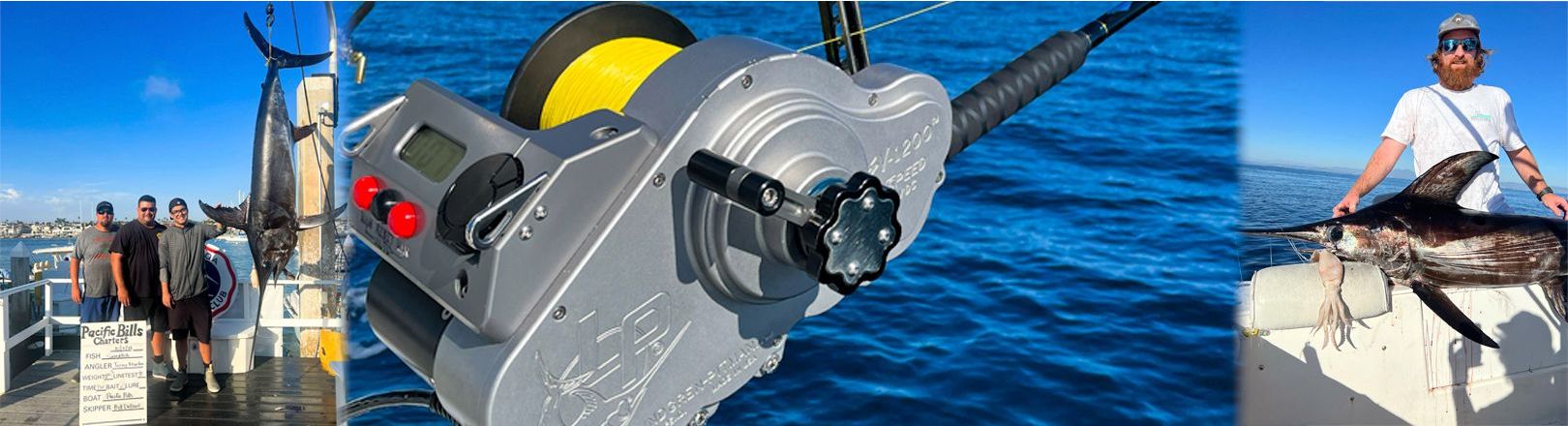
As an angler, a couple of species seem outside the realm of capture. Swordfish, for many, is one of those species due to size, occurrence, and specialty tackle. At times, the perception of Swordfishing on the West Coast seemed limited and only available to specialized commercial fishermen until recently. Over the last several years, it’s become apparent that the swordfish fishery in Southern California is quite robust and much more attainable than we had previously thought by targeting swordfish through the daytime swordfish deep drop method. This fishery has become increasingly popular in the last decade and has had significant success. While collectively, as a fishing community, we’ve learned a lot, there is still a need to figure out a lot. The little we know is enough to get the occasional hook-up and trophy to the dock.
It should be recalled that pursuing a swordfish is not for the faint of heart. While most will look to use an electric reel to do most of the heavy lifting, you’ll still have to contend with one of the most prehistoric, radical creatures in the ocean. This is not your basic gamefish, and there’s a reason why they have been labeled the Gladiator of the Sea. Stories of swordfish fighting for hours without a sign of exhaustion are not uncommon. Beyond their ability, tenacity and ferocity is their personality. Swordfish have been known to have an off-putting disposition, if you can call it that, with countless stories of them attacking underwater submersibles, divers, and even boats. There have been sharks, whales, and all sorts of large creatures found with a swordfish’s sword embedded in them. Please keep in mind these fish are capable of extravagant feats. This is not a one-person hunt. Ensure you bring your “A game” and a most capable crew in pursuit.
Now that you’ve been adequately warned, let’s understand what we know about this fishery and how to rig and target this fantastic gamefish. First, the swordfish found in the Southern California Bight are similar to those found in the Gulf and East Coast, though they have different behavioral traits and habitats. While our tactics and strategy are similar to other locations, small subtleties set our fishing location apart.
Where To Fish
Where to fish for swordfish could be equated to 25% informational context, 25% historical context, 25% information from your electronics, and 25% dumb luck. You can look for some basic information to get you in a position to try your luck, but realistically, swordfish can show up just about anywhere.
From historical context and recorded studies, we know swordfish are deep-water lurkers. The swordfish in our waters tend to live in waters over 1000’ deep, which they prefer to be in 800 – 1200’ as a comfortable feeding depth. As an exception to the rule, swordfish surface to sunbathe and warm in the digestive process but are not likely to feed actively during that time. Another exception to the rule is at nighttime, where swordfish have been known to feed much shallower in the first few hundred feet of the water column. This does present an opportunity but also has a high incidental catch rate of bycatch like sharks and tunas.
Like most gamefish, bait is a big part of the equation, and locating this bait layer, often called the feed layer, is an essential ingredient in selecting where to drop your presentation. If your vessel is equipped with a capable transducer, you should be able to slowly motor around and spot the fuzzy area that swordfish tend to call home and feed in. While this is important, swordfish have often been caught where no feed layer is transmitted. So, if you feel good about an area, give it a shot.
Structure is another important part of selecting a location to start your drift. Ideally, you want to look at areas that will funnel water, then hit a structure, causing the current to upwell, aggregating baitfish and nutrients. Thankfully, along the Pacific coastline, plenty of diverse banks are nearby and easily identifiable.
Lastly, is current, while there is not a lot of documented proof that these fish feed on the current, we can use reasoning from other fisheries that this might be a trigger. Additionally, a good current will allow you to set up a healthy drift, which equates to having your presentation cover a larger area of water in hopes of bumping into a hungry sword.
Deep Drop Tackle
As the name suggests, you'll fish deep to target Swordfish during the daytime when the deep scattering layer drops. Because it takes so much effort and time to get your presentation correctly placed hundreds of feet down, it is necessary to keep things simple and manageable. At most, any vessel should not be fishing more than two lines in the water. One setup can be fished vertically from the boat called the Tip Rod, and the other setup is rigged over a hundred yards away from the boat on an indicator buoy or a float. This is referred to as the Buoy Rod.
(Behavior note about this fishery: Your presentation will be weighted to get it to the extreme depths where these fish live. When a swordfish eats your bait, it will eventually feel your weight pulling down against it. As a behavioral reaction, the swordfish will swim to the surface, causing slack in your line. On the Buoy Rod, this will be noted by the indicator buoy lying on its side rather than standing vertically. On the Tip Rod, this will be indicated by extreme slack in your line and rod tip standing up straight.)
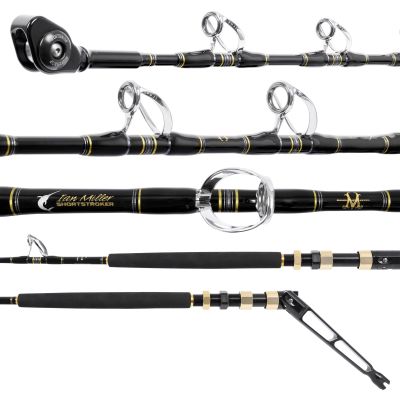
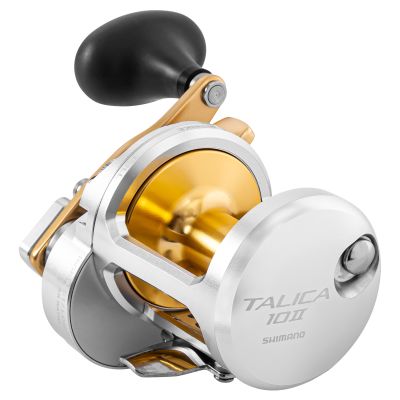
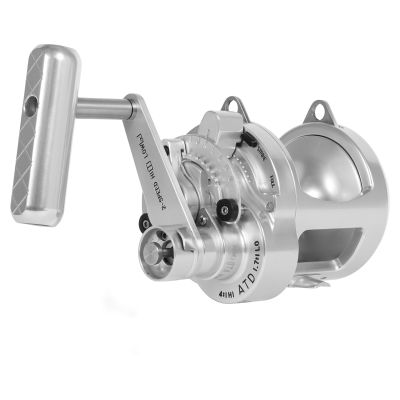
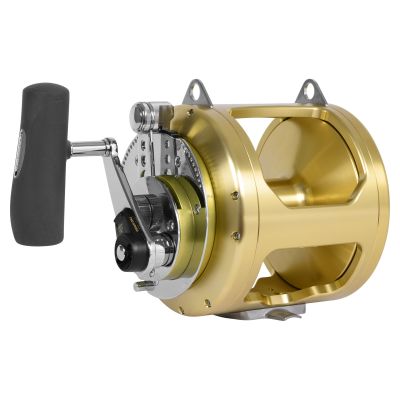
The Tip Rod & Buoy Rod
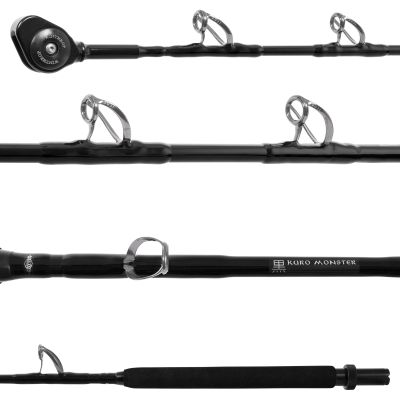
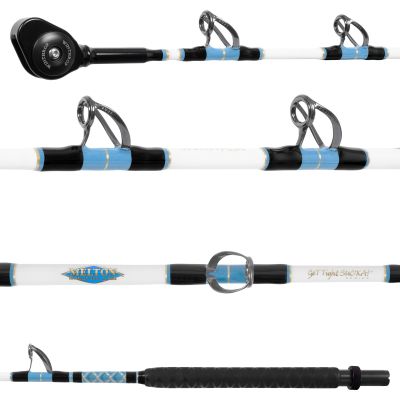
Fishing rods for swordfish in the Southern California Bight are typically rated for 150 pounds or more. They also are longer than a rail rod to get around the engine or pulpit if needed. An additional key characteristic of the rod is an adjustable curved butt; this allows your presentation on the tip rod to sit more naturally and gives the rod a nice load bend from the weight. The curved butt also allows a more natural position for fighting the fish, as you likely will be fighting the fish partially in the rod holder. The tip may also have more give in comparison to the rod rating. I find that the Tip and Buoy rod can be the same, with the difference being that you’d fish the Buoy rod with the butt in the straight position vs. angled on the Tip Rod.
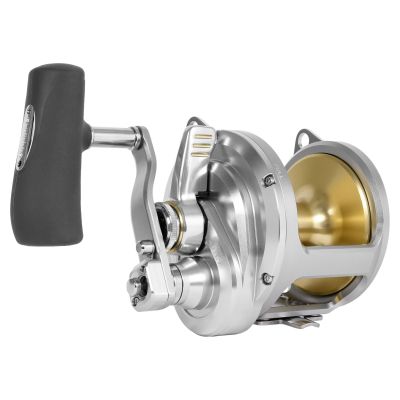
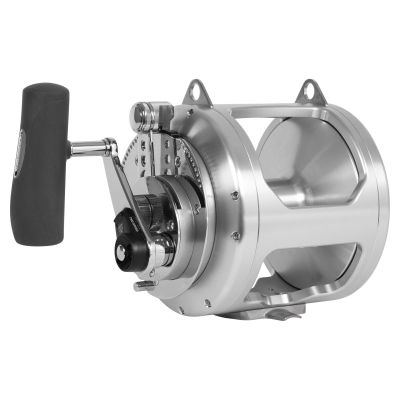
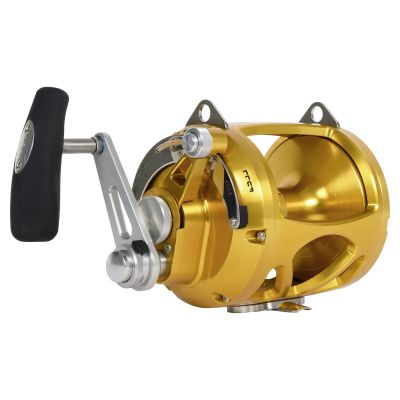
Regarding the reel, I prefer to fish one reel, a large conventional 2-speed lever drag reel for the Tip Rod precisely, and an electric reel for the Buoy Rod. I like the Shimano Talica TAC50II Lever Drag Reel for my Tip Rod, spooled with 100lb. solid braid fishing line. A lot of line on your reel is necessary as you’ll be fishing substantial depths. It is suggested to have over 2,000 yards of line for either setup. When putting your line on your reel, it is a good idea to have whoever is spooling it mark your line every 500 yards. This will allow you to make an educated guess on where your line is sitting in your presentation. When planning your presentation, it is a good idea to stagger your baits to search different depths for swords. The hand-cranked Tip Rod would sit shallower so that you reel less when it’s time to retrieve your gear.
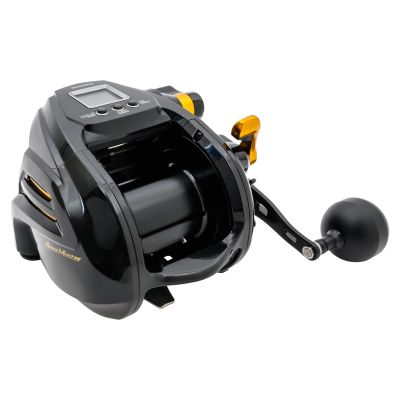
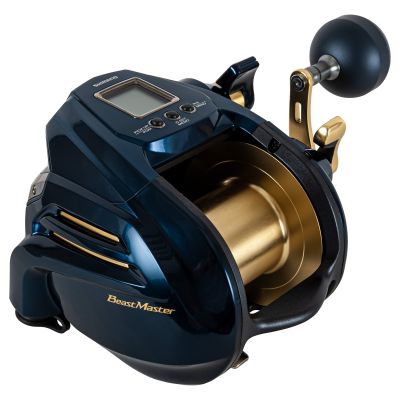
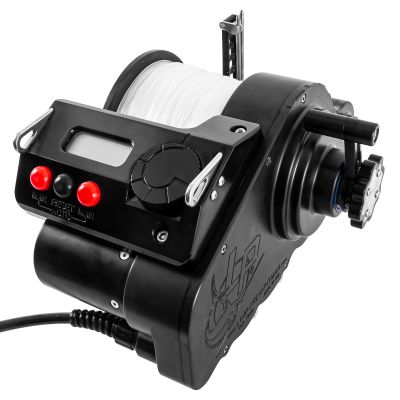
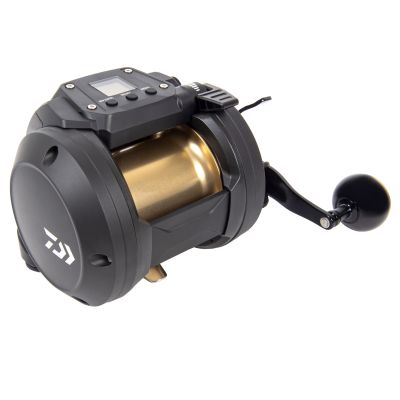
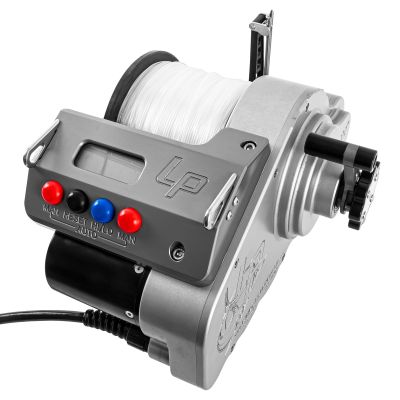
Electric Reels come in various sizes, price points, and complexity. It has become more common on the East Coast to use specialized deep-dropping reels like Lindgren Pitman Electric Reels, which are the best for this application. Still, using electric reels in this fishery is in its infancy, and only some anglers have jumped to this reel caliber. Many anglers on the West Coast have adopted the Shimano, or Daiwa Electric reels as they have a lower price point. I have found success using the Shimano Beastmaster A 9000 Electric Reel. If you can afford the Lindgren Pitman style reels, nothing but positive reviews have come from this reel style. One thing to consider in price point is that this style of fishing puts an enormous amount of strain on gears, parts, and drag. In a sense, you get what you pay for, and you’ll need to determine if this is a once-a-year practice or if you intend to target this fishery regularly. If you plan to make this style of fishing part of your yearly repertoire, you may want to invest in higher-value equipment. Another essential aspect to note is the need for electrical power, which can come in the form of power directly from your vessel or a battery rigged up to power the reel. Many anglers have made specialized kits for a portable battery, and some new electric reels even have a portable battery option.

Rigging For Daytime Deep-Drop Swordfishing
If you ask ten different people this same question, I’m positive you’ll get ten other answers with a 10% variable, all accomplishing the same thing. As you get versed in your rigging, don’t hesitate to add your flare or slight twist to make the presentation more enticing for the swordfish and yourself. Some anglers rig one hook or two hooks and play with leaders, lengths, lights, etc.
Rigging Your Bait
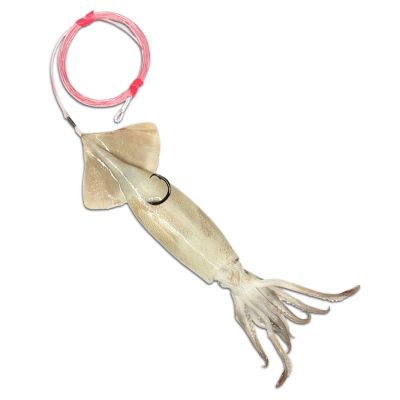
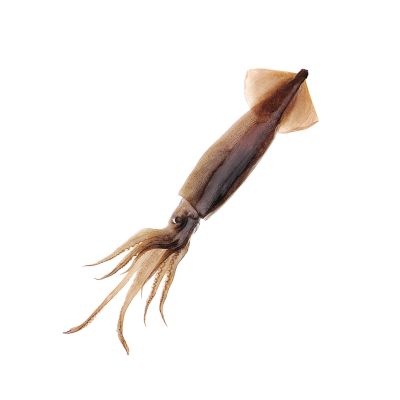
Swordfish are opportunistic feeders and will consume a variety of bait options. Some anglers have equated them to oversized catfish because they’ll eat anything stinky. I tend to have more respect for them and see them as fine-tuned gamefish, but they do have a non-discriminatory palate. The most used swordfish bait is natural squid bait due to its availability and sturdiness. This is not to say this is the only bait option; Dorado bellies, whole mackerel, cutlass fish, eels, and several other options perform equally well. Squid, though, are easy to rig, hardy, and, best of all, stinky. There are dozens of squid species in our waters, but they are seldom available to purchase or catch. The most common species is the market squid, which is too small for rigging purposes and provides a very small target. Many Asian Seafood Markets carry Longfin Squid from the East Coast. Another option is the Jumbo Squid (Dosidicus gigas), imported from Peru and Chile’s cool waters. While these are not indigenous, they represent a similar target to our local squid but are much larger and have repeatedly proven effective. Rigging these squid can be messy and smelly, but it is simple. The video below shows a step-by-step process of rigging a squid for this application.
If you’re not keen on rigging your bait or don’t feel like making a mess out of your kitchen, we can’t blame you. Thankfully, there is an alternative, and that’s in the form of purchasing already rigged baits. Baitmasters of South Florida offers pre-rigged squid for swordfishing through Melton Tackle, completely ready to use. These baits are rigged with a 10 – 12” Longfin Squid, 15’ of 300 lb. mono leader, Extra Strength Mustad 9/0 Big Game Welded Hook.
-
 Tuf-Line Rigging FlossOut of stock
 -
-
-
-
-

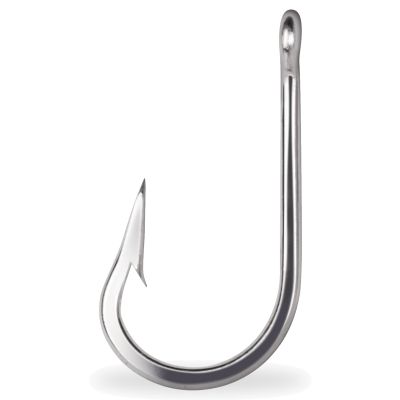
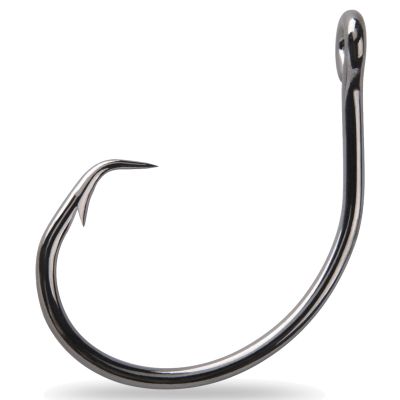
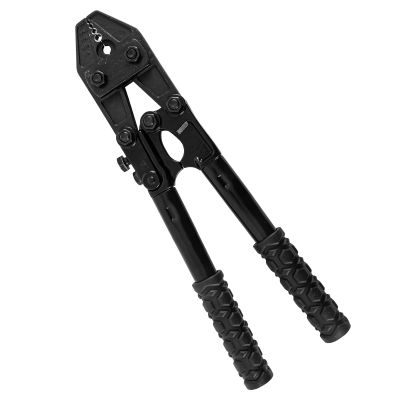
Rigging
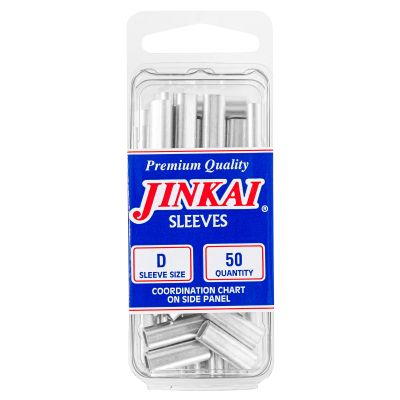
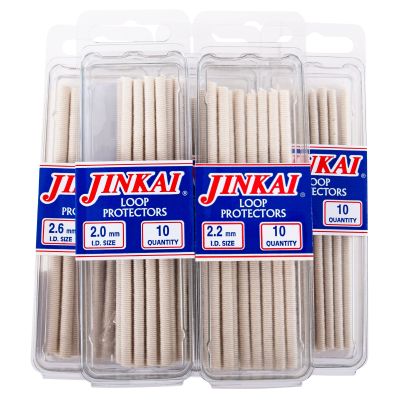
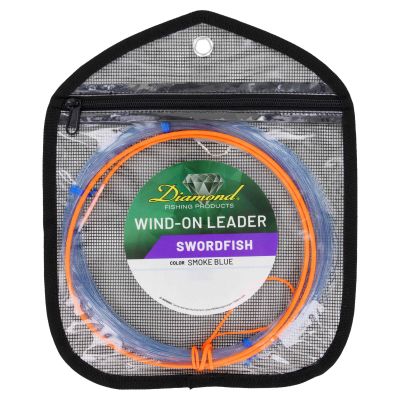
Rigging for sword fishing is unique and has a lot of intricacies, but once you’ve seen it, it’s easy to repeat. The best sense is made of rigging when looking at a diagram of the rigging. Essentially, you’ll have your bait rigged up and ready to be attached to a snap swivel via a crimped loop. Your Tip and Buoy rods should also be spooled up and rigged with a bimini twist on the end of your line. From your loop, you’ll be connecting a wind-on leader. At the end of the wind-on the leader, you’ll have a snap swivel, which is where you’ll connect your rigged bait.
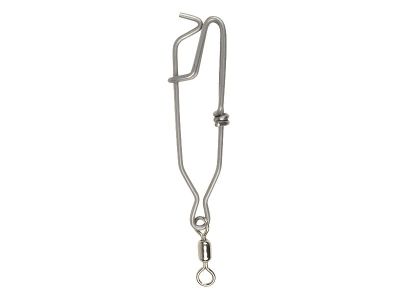
On your wind-on leader, you’ll have a series of locations that you’ll use to connect fishing lights and your fishing weight. There is no right or wrong where to connect your lights; it’s all personal preference, and you’ll want to experiment with what you think might work. These lights are attached using a longline clip. Common practice is to use several small lights and one larger light. The lights are an added attractant for swordfish. In the extreme depths where they live, many animals are equipped with the ability to make light, such as squid. This is accomplished using bioluminescence. In theory, the lights are attractant of bait in the area, which in turn attracts the swordfish.
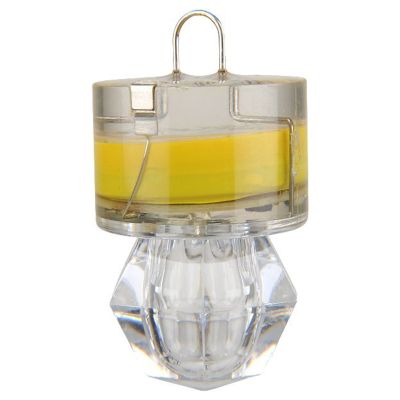
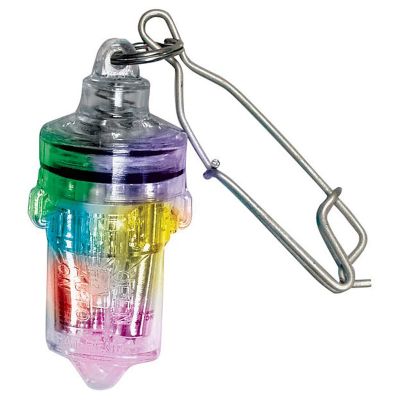
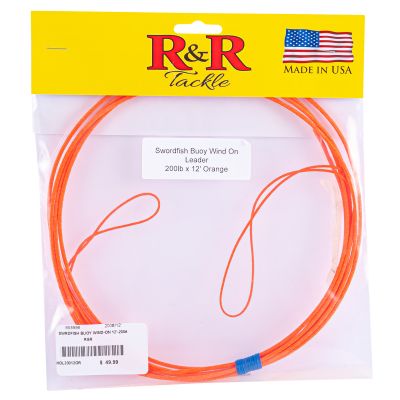
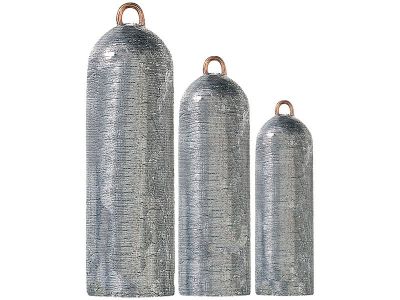

To reach the depths in search of a swordfish, the next step is to attach a Deep Drop stick lead, which can weigh as much as 12 lbs, to your rig. Swordfish anglers often contend with strong currents along the Gulf and East Coast of Florida. In the Southern California Bight, the currents are significantly milder by comparison. Here, you'll want to use a 6-10 lb weight, depending on the current. lead to get your presentation to the desired depth.
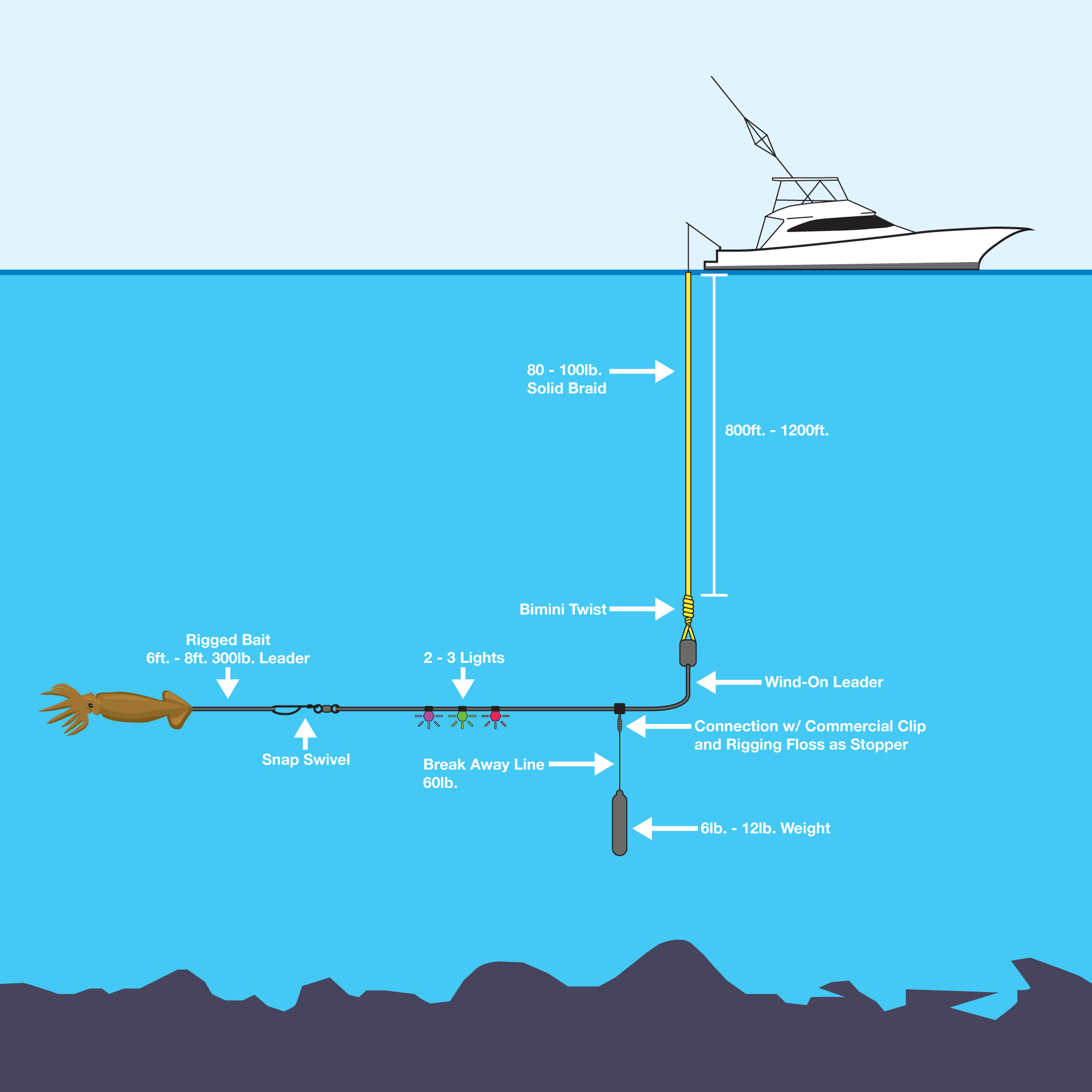
Swordfish rig with 800–1200 ft of 80–100 lb braid from boat to wind-on leader via Bimini Twist. Main line has squid bait on 6–8 ft 300 lb leader, snap swivel, 2–3 lights, and a 6–12 lb weight hanging below on 60 lb breakaway line connected with Commercial Clip and Rigging Floss and Stopper.
Deploying Your Bait
Getting your swordfish baits deployed and laid out correctly without tangling them is an art, especially when deploying two setups. Again, as mentioned earlier, this is a team operation, and a trusted crew member will make things much smoother. A few things should be taken into account when deploying your baits.
- You want to notice which way you’ll be drifting, and you’ll want to drive up current as you deploy your bait. By driving in the current direction, you can keep everything in line as it settles into depth.
- You’ll want to deploy your Buoy rod first, and once it’s set, you can slowly drag it up while you drop your Tip Rod set up.
Landing Gear
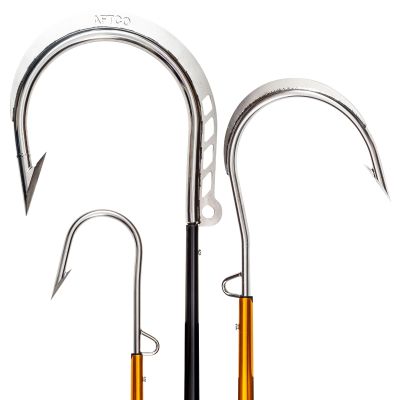
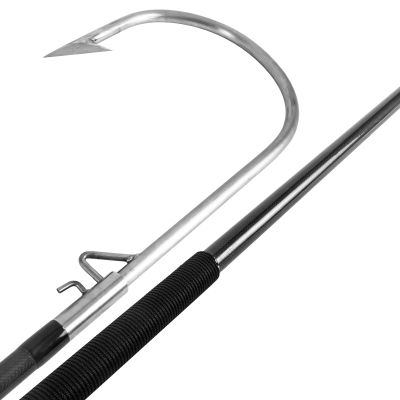
As was mentioned in this article, fishing for this species is not for the faint of heart. Once you’ve hooked one and fought it, the battle may begin, as these fish seldom call it quits. Having the correct landing gear is essential to ensure you don’t damage the boat, your passengers, the fish, and even yourself. Having several fishing gaffs on board is necessary to subdue one of these creatures. A flying gaff is also recommended in case you land a large one and may be unable to control it. Make sure to always check the most current regulations as to the materials to have on board.
We are extremely lucky to have such a fantastic fishery at our fingertips. Be safe out there and practice with caution while making lifelong memories. Please remember only to keep what you will use and treasure our waters.