

The Southern California Bight has two species of Halibut, the Pacific Halibut and the California Halibut. As one would infer from the name, the Pacific Halibut has a larger distribution and ranges from Southern California to the waters in the Gulf of Alaska. The Pacific Halibut is significantly larger than its cousin, the California Halibut. While Alaska Halibut fishing charters are popular and a great way to catch Pacific halibut, the California Halibut is much more common in our waters and what we refer to when discussing Halibut fishing. (NOTE: The Pacific Halibut fishery has been closed in California as of August 2023).
The California Halibut (Paealichthys californicus) is a unique fish built for ambush. Many folks associate Halibut as a bottom-dwelling opportunistic feeder just waiting to engulf its prey. This is partly true, and while it is an ambush predator using its environment to disguise it from its target, it is equally adept as a predator of pursuit. As capable as it is at engulfing a passerby baitfish, it is similarly adapted to chasing down its prey. This ability is just one thing that makes this species one of our great gamefish.
The pursuit of this gamefish is fueled by their ability to be fished in so many different manners and habitats as well as their value for white supple meat. Their significance at the dinner table has been proven but its their fighting ability and impressive side that often draw anglers to target them. They can be found from the surf to the deep and fished in many different ways, bounce balling or a three-way rig is one of the most productive ways to target them in the Southern California Bight.
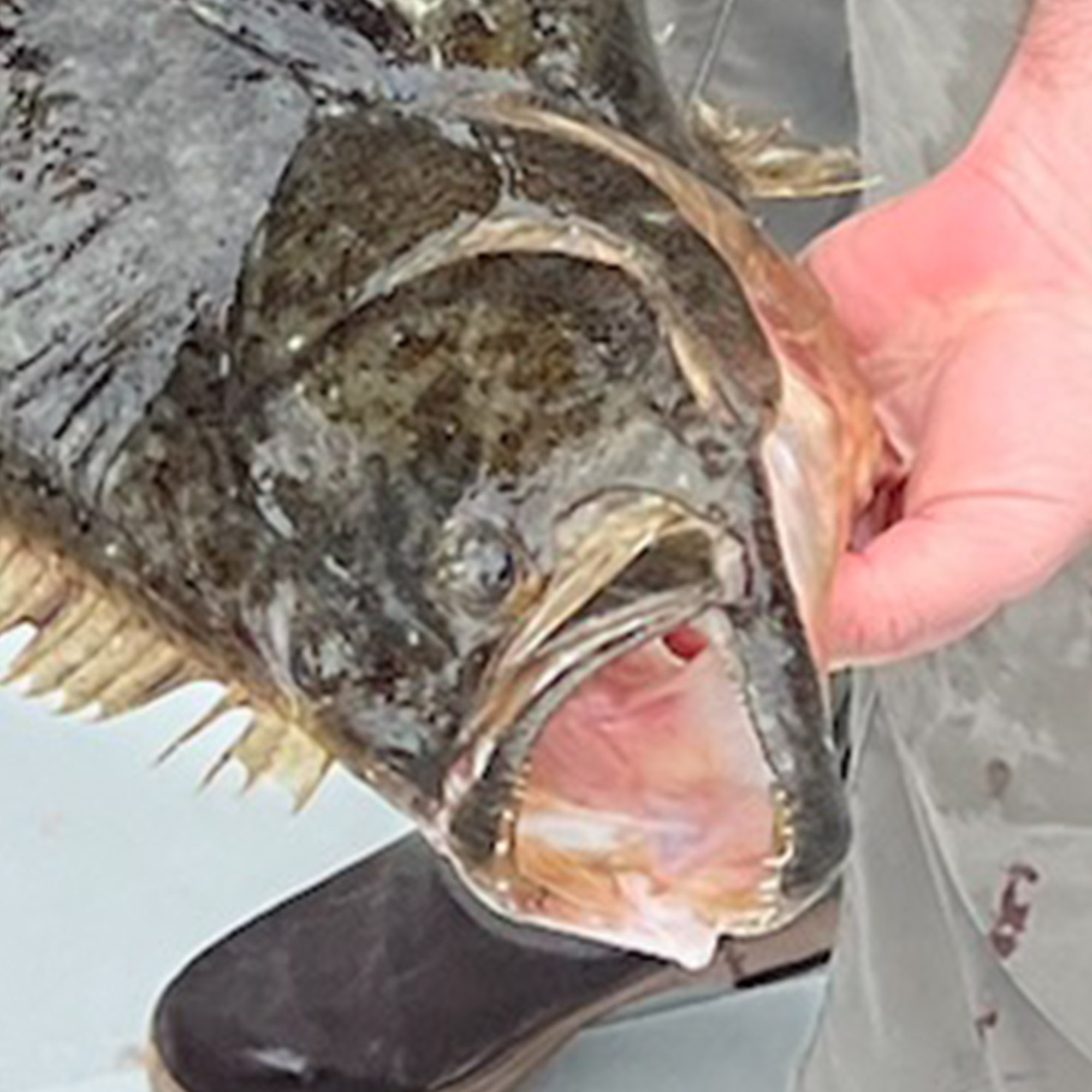
A face only a mother could love. The California Halibut is the king of the bottom; their teeth are not to be taken lightly.
Characteristics
Halibut, as you’re probably familiar with, have a flat body with a large triangular tail. While they spend most of their time patiently waiting on the bottom, they can move rapidly and powerfully. Due to the form of their body, they can use their flat body as an extension of their tail, which can be felt when you hook one, often putting up a considerable fight especially when they are close to the bottom. Their flat, broad bodies are impressive in size due to the distribution of their body mass. The world record is over 60 lbs., an absolute monster, and was over 5 feet long. World Records are not caught daily, but impressive 20-40 lb. range models are not a rarity.
While their size, ability, and power are all notable attributes, their jaws often catch the attention of most. The jaws of the California Halibut are truly impressive, lined with fang-like K-9s and a continual row of sharp teeth on the top and bottom. The size of the jaws in ratio to the fish’s body is also to note. This predator is meant to inhale just about anything it encounters. It’s not ridiculous to think that a halibut can engulf prey half its size.
Habitat
Halibut can be found anywhere from the surf zone to considerable depths of 200+ feet. In this article, we’ll focus on where we presume they spend the most time, where it’s believed to encounter the largest specimens, and the best technique to target them there. An average 60-100 ft. depth is a magic range for these larger units or, more so, keeper-size fish. In Spring large fish do enter shallow waters to breed or in summer they may be close to the beach for a grunion run, but the 80 ft. depth has been a magic depth for many targeting this odd fish.
Halibut lay in ambush around transitional structure, where two areas meet: sand and reef, cobblestone and kelp, and mud. Another good place to look for them is where the ocean goes from deep to shallow, quickly causing upwelling and forcing bait into a turbulent current. Try to target these areas rather than large areas of the same sediment or makeup.
As with most of our coastal gamefish, the current triggers feeding. It would help if you looked to fish on the current as these fish will be more active. Predatory fish will often have their face into the current in hopes of bait fish being pushed through with the current. Current is also important in locating congregations of Halibut. While they can actively swim, often they wait in ambush, which means you must go to them. Setting up a good drift is imperative to locating Halibut and covering areas in search of them, a one-per-hour drift is ideal.
When current is not significant or at least not significant on the surface due to the weight of your boat or opposing wind, anglers will often use boat power to mimic a moving current. By bumping the boat in and out of gear, you keep the boat moving as a current would, allowing you to cover the area in search of Halibut.
Remember that while halibut are not typically known as schooling fish, they can still gather in the same areas in significant numbers. If you hook one, that might be the only one in the area, or there may be several. So, make sure to redo your drift if you have success in one area.
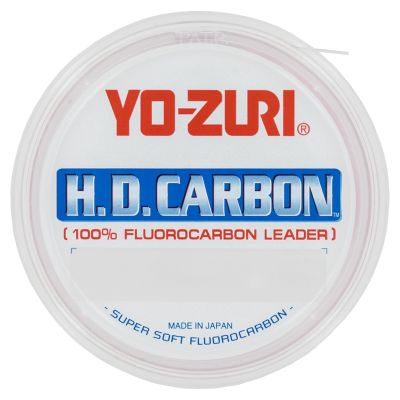
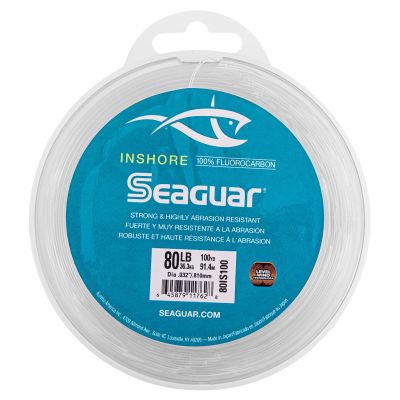
The diagram below shows a Halibut rig. Run the Fluorocarbon leader though the eyes of a single hook and terminate with a treble hook. Along the shaft of the single hook, tie a snell with separate lighter piece of monofilament leader. This will hold the shaft of the single hook with the fluorocarbon leader together, and allow you to slide the treble line to make it shorter or longer.
Rigging And Bait
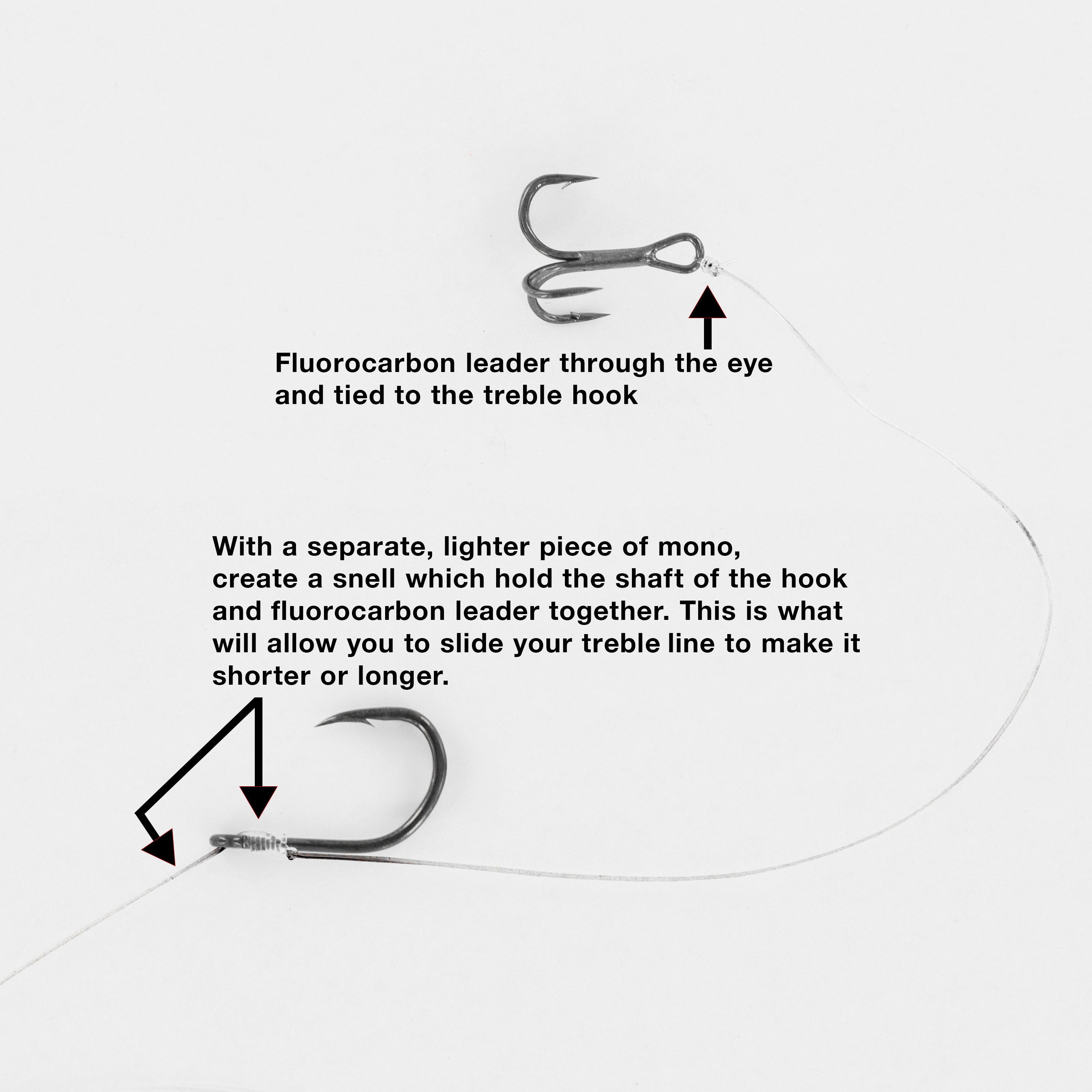
Flurocarbon leader through the eye and tied to the treble hook
With a separate, lighter piece of mono, create a snell which hold the shaft of the hook and fluorocarbon leader together. This is what will allow you to slide your treble line to make it shorter or longer.
Halibut are entirely opportunistic predators and are very non-discriminatory regarding their prey, so good Halibut fishing takes strategy. They have a “bite first and figure out second” mentality. Often, they’ll give a singular bite first to incapacitate their prey by inflicting the bait with a solid chomp of those teeth. It will usually hold onto the bait by the mid-section, hoping it begins to die so it can finish consumption without resistance. Because of this feeding method, Halibut are well known for short-biting bait, meaning only biting your bait’s tail, causing the angler to miss the fish while trying to set the hook.
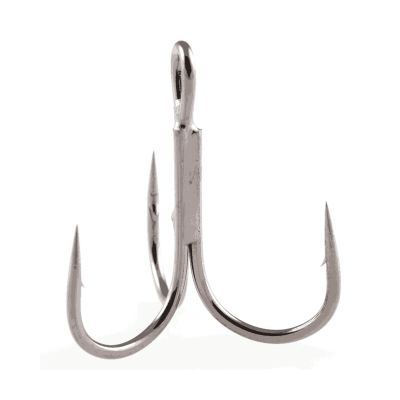
Due to Halibut’s tendency to short bite and test rather than inhale, the recommended rig is a snell or trap rig. A trap rig adds a treble hook to your regular nose-hooked bait. The treble hook extends to the tail and assures that any short bights are met with hooking the culprit. The setup is quite simple and highly effective.
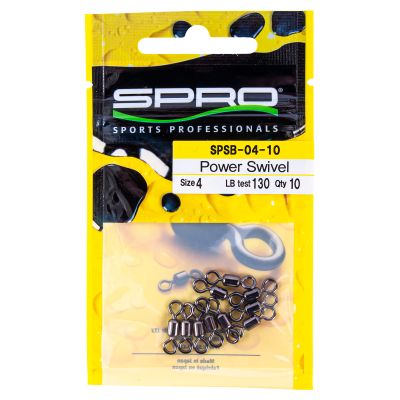
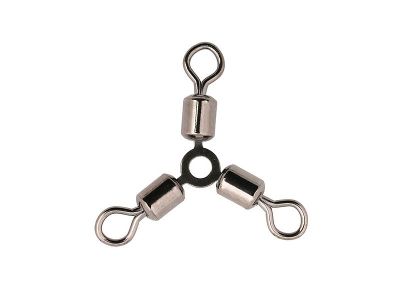
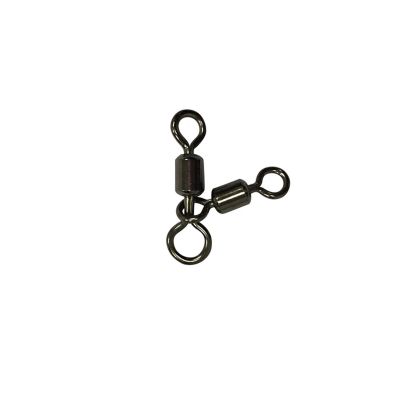
The diagram below shows a complete bounce ball setup. The 50 lb test main braid line is connected to a combination swivel. On the main end of the swivel, 2 feet of 20 lb test monofilament is connected to a lead ball. The combination swivel coming off the side is connected to 3 feet of 40 lb test Fluorocarbon leader. At the end of the Fluorocarbon is a chrome dodger. The other end of the chrome dodger is connected to another piece of 3 feet of 40 lb test Fluorocarbon leader. Finally, it is terminated to a nose hooked bait, trebel trap rig.
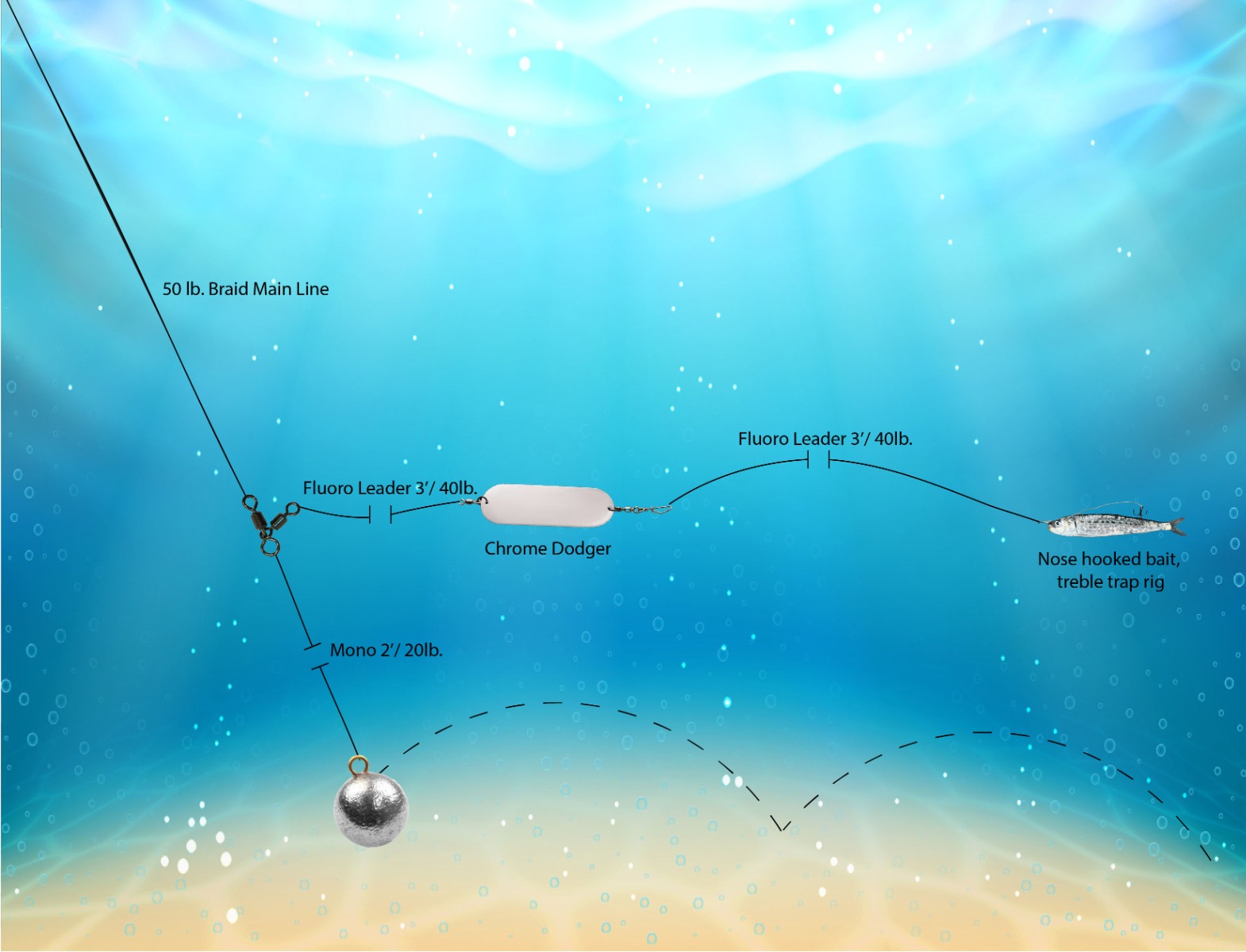
Here’s your basic bounce ball set up. Make sure you lift 8-12” off the bottom to make your bounce makes enough disturbance. Flashing dodgers, hoochie skirts, painted lead can all be additions to increase visibility and attention.
Bounce Ball Trap Rig / Three Way Rig
Several rigs can be used to target Halibut, with the common denominator being that you keep your presentation close to the bottom. Anglers targeting Halibut have been particularly successful using what’s called bounce-balling. As the name implies, bounce-balling takes your lead weight, and as you slowly troll or drift, you’ll pick up your presentation and let it drop. This makes sure your presentation is on or close to the bottom. As you bounce the lead it will make noise, and a cloud of sand or mud that will entice a Halibut to come close and make an inspection of the disturbance.
Some anglers emphasize the component of disturbance and attraction and go to the length of having brightly painted leads and hoochie skirts to adorn their bait. Another common practice has been to implement a flashing dodger blade to assist in attraction. While these items will work, simplicity is best, and I feel success can be achieved without them.
Halibut will take down almost any bait presentation as long as it’s within reach and they can sink their jaws into it; mackerel, sardine, anchovy, smelt, grunion, jack mackerel, and squid work. I’ve noticed it’s more of the case of the size of your bait and the size of fish you’re looking to target. If a squid nest is present in the area, squid is a go-to bait. Frozen bait is also practical, but remember the saying, “live bait is king,” applies to this fishery.
Tackle
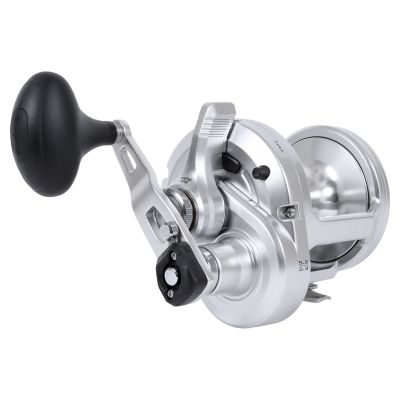
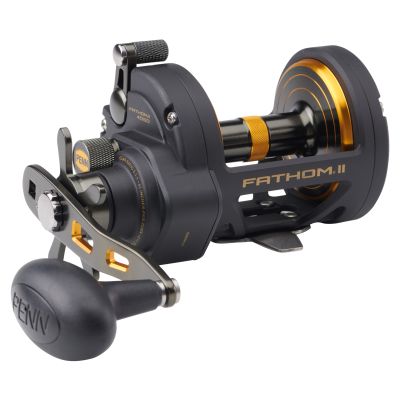
The great thing about Halibut fishing trips and fishing charter experiences is that they can be entry-level and quite simple, so you don’t have to break the bank. There is no need for the highest caliber of gear and performance. Although it must be said you get what you pay for. A good 400 – 500 size conventional star drag reel or a conventional lever drag reel is excellent. For your rod, you’d be looking for an all purpose conventional rod, such as a boat rod in the 7 – 7.5’ range with a soft tip and decent backbone in case you lay it into a trophy. A rod in the 30 – 50 lb. range would be perfect. There are so many options with lines, and everyone has their preference. I prefer straight braided fishing line as it allows me to feel every little tap and bump on the bottom.
While it's noted that entry-level gear is capable of targeting Halibut, it should be noted that this style of fishing and rigging often results in a significant amount of bycatch, with some of the bycatch being considerable in size. Hooking black sea bass, yellowtail, thresher sharks, and rays is not uncommon when fishing for Halibut. If you can upgrade your gear, it's recommended that you do so.