

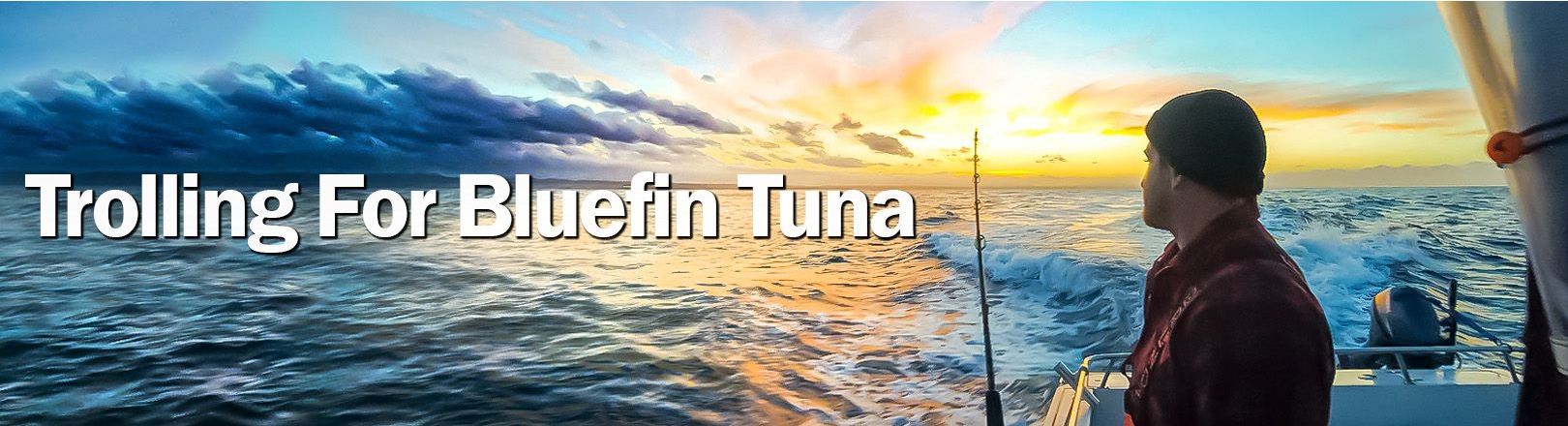
Bluefin Tuna is arguably the most valued fish in the world. From a culinary standpoint, they are prized by restaurants globally for their rich, delicate flesh. From an angler's standpoint, they’re the ultimate gamefish, reaching over 1,000 pounds, capable of long runs, having never-ending battles, and applicable to a number of presentations and fishing techniques.
Over the last several years, the amount of Bluefin tuna off the West Coast of the United States has been unfathomable. Historically, Bluefin Tuna have been synonymous with Southern California. The early 1900s were some of Southern California’s most prolific years for Bluefin Tuna fishing. The fishery during that time was so productive that Point Loma was coined Tunaville. Similarly, Southern California also gave birth to the Avalon Tuna Club, which sought to bring the element of sport and respect to capturing these impressive fish.
Over the decades, Bluefin have come and gone. While their numbers were extraordinary in the early 1900s, in the late 1900s, they were few and far between and were more of an incidental catch. It’s not common knowledge where they go on those off years. They may lurk further offshore, migrate to a different location, feed deeper, and go unnoticed. The last El Nino in 2015 began their resurgence in the Southern California Bight. They have made a dynamic return and since that year, we have been fortunate to have unbelievable Bluefin Tuna quantities to target as anglers.
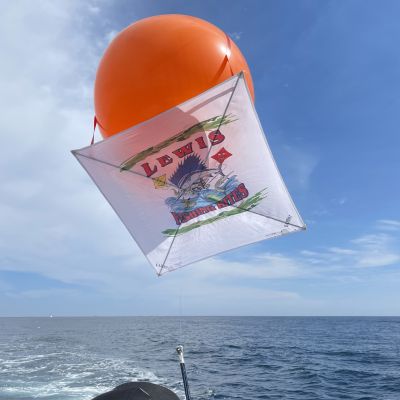
Bluefin Tuna has notoriously been a difficult fish to catch from those early days until today. Continuously, they have tested anglers' ingenuity, patience, and ability to adapt and think outside the box. It was the Bluefin Tuna that inspired Catalina Island anglers to implement a fishing kite to be able to present a flying fish. This method proved highly successful in targeting larger Bluefin Tuna and gamefish worldwide. This train of thought continued as anglers in the Southern California Bight experimented with new techniques. While fishing bait will always be at the top of the list as a productive tactic, it’s only sometimes applicable. Bluefin Tuna have many moods, and it is hard to present bait when deep or moving quickly. Anglers have been able to experiment with trolling methods, which have been highly successful at getting Bluefin Tuna on the deck over the last several years.
Historically, anglers have sought to target tuna globally by trolling. Small feathers and skirts have been a common approach to targeting tuna. While these have proven their value and more among most tuna species, our local Bluefin Tuna differ. Bluefin Tuna, in comparison, have a much lower hook-up ratio with these lures causing anglers to get creative and try new lures and methods, which we’ll address in this article.
Cedar Plugs
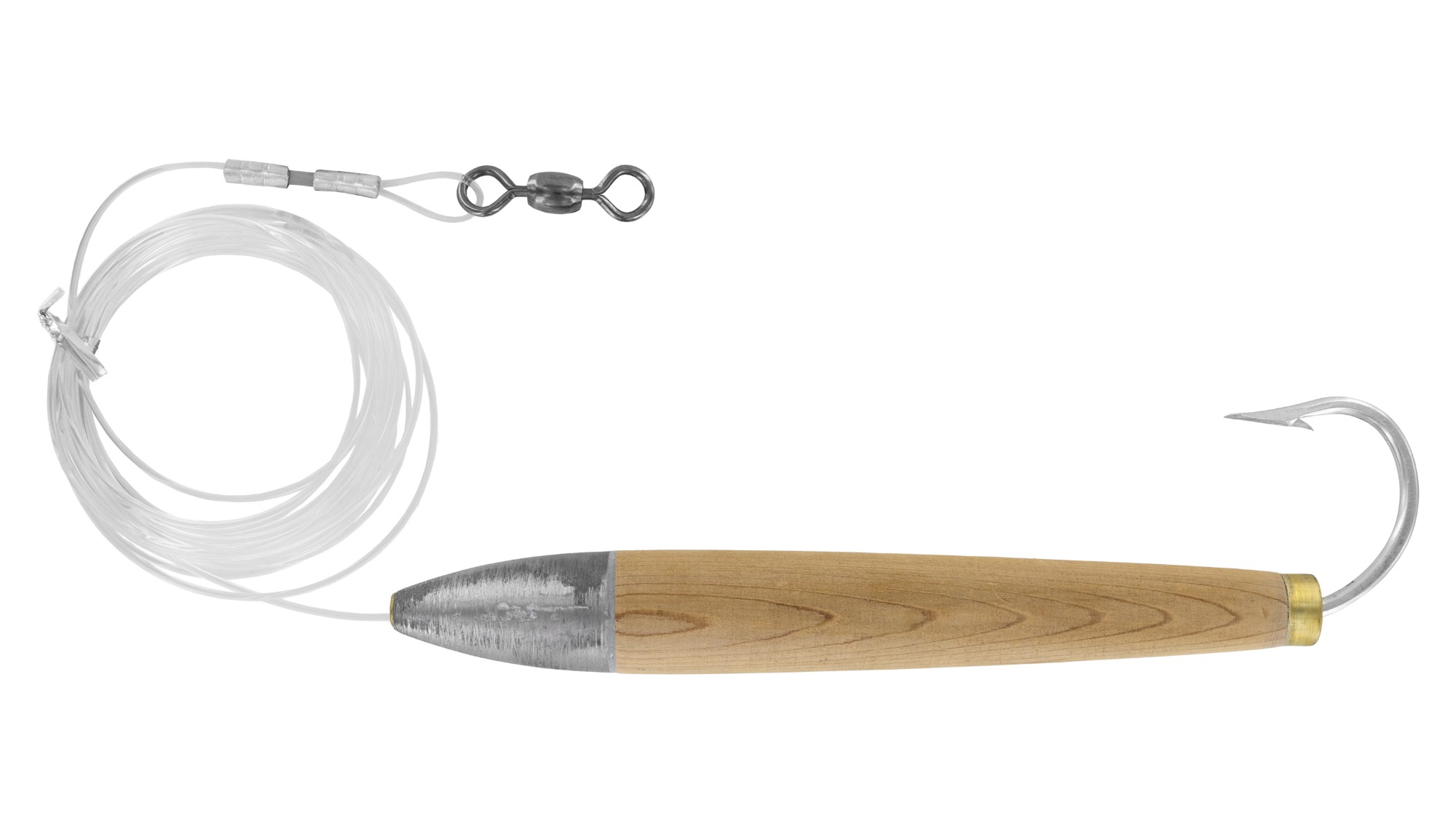
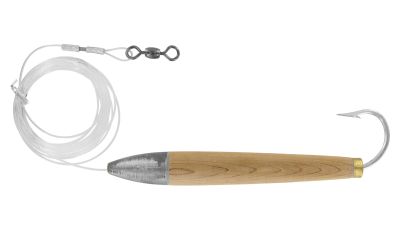
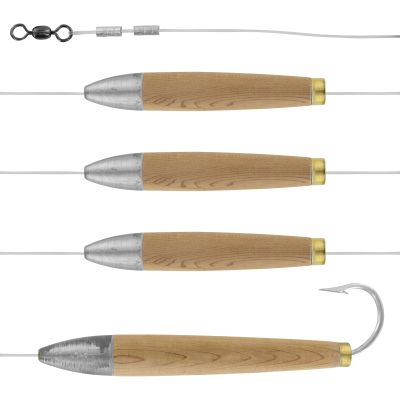
At the top of the list for trolling lures for targeting Bluefin Tuna is the Cedar Plug! This one lure baffles anglers worldwide: no fancy colors, noise, or anything. This lure has been around for ages, and for some reason, it is an absolute tuna killer regardless of the species. Unfortunately, I can’t give honest insight into why it works so well or what it’s trying to mimic, but I will seldom leave the dock without one. I’ve seen times when Bluefin get keyed in on the Cedar Plug and it out-fishes all other methods. Other times it doesn’t even get a sniff. Considering how economical and simple it is to use, it’s worth having on the boat at all times. The go-to is the daisy chain style Cedar Plug Chain, but the singles also work effectively. Additionally, at times it seems as if natural wood color outperforms, fancy, more life-like options.
Trolling Speed: 5-9 Knots
Distance From boat: You should experiment with what works on a particular day. Traditionally our Bluefin tend to like a trolled presentation in clean water, so that means getting it way out behind the boat, which works for me. When trolling other tuna species, I keep it close to the boat into the second wake.
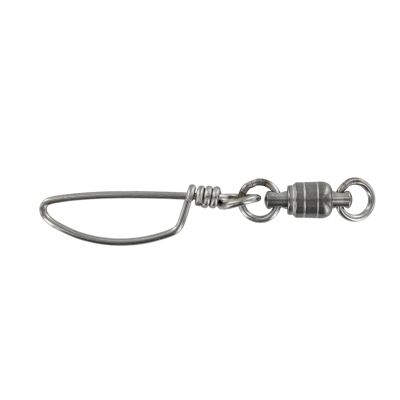
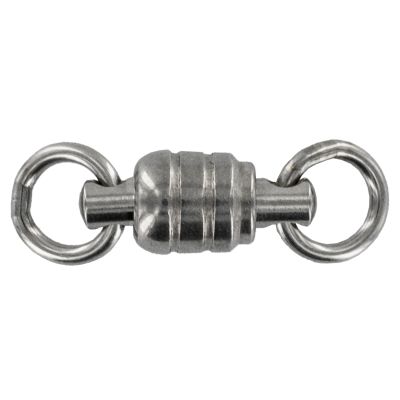
Rigging: As simple as the cedar plug looks, a couple of intricacies will ensure you’re running it correctly. The inside of the Cedar Plug is not a perfect circle, and there is a slot in which the hook should sit to swim correctly to give the lure the appropriate action. Additionally, it’s essential to have the connection point be a ball-bearing swivel to a snap swivel with a good ball bearing. Cedar Plugs depending on each one may spin a bit, so having doubled ball bearing swivels assists in preventing line twists.
When To Use: The Cedar plug is used often to search an area, maybe you’re glassing through an area, and while doing so, you should have a line in the water. The Cedar Plug is a low-maintenance trolling lure that can be fished at a comfortable cruising speed while looking for life.
Rubber Flyer
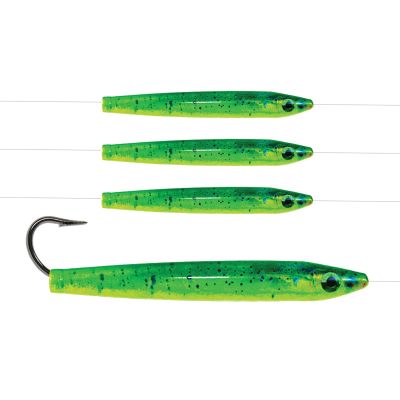
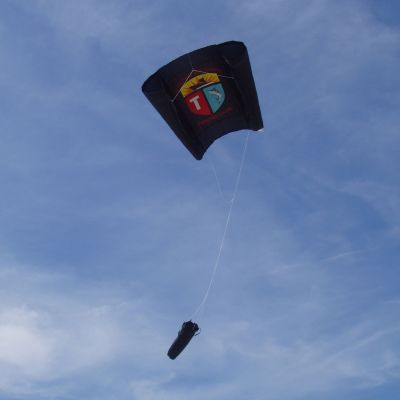
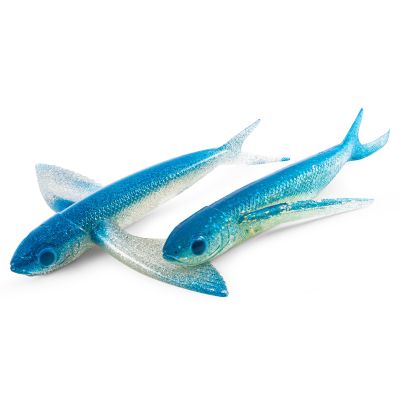
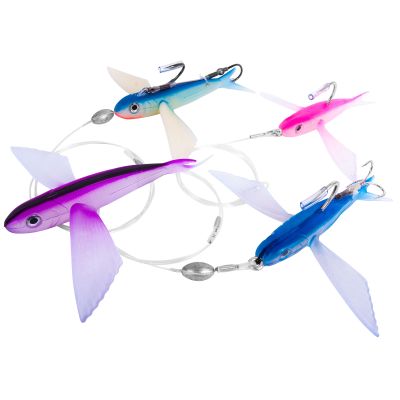
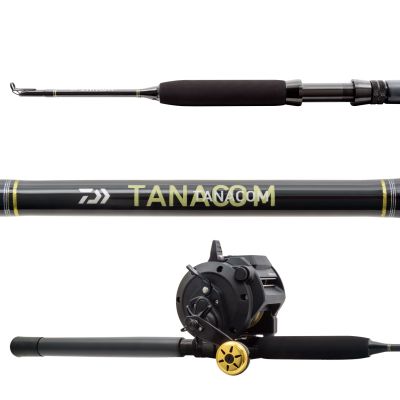
The rubber flyer was invented due to Catalina Islands Kite Fishing techniques, but it is unclear where it originated. This lure is used worldwide, especially in Mainland Mexico, to fish for giant Yellowfin Tuna, where it’s become a prime go-to tactic. Ideally, it’s the marriage between trolling and flying a kite except with a lure rather than a bait which is how the kite had been implemented in early years. Through this method, you are suspending your flying fish lure on the surface while you are trolling it, and through swell and line manipulation, you can skip the lure and get it out of the water for a second or two, causing an attractive splash when it lands. This method in 2016 through 2018 was the go-to for our Bluefin Tuna fishery. This method taught us a lot about how tuna behave and hunt.
One of the fantastic things that transpired through this technique was learning how well tuna can see and how well they can see out of water. We’ve been able to observe that tuna can track the lure just above the surface, entirely out of water. In fact, keeping it out of the water enticed them to attack the lure aggressively. Additionally, we realized how active they become when the weather is up. The more wind it seemed, the more aggressive they would become. Often multiple fish would fly out of the water, trying to engulf the rubber flyer while trolling. While it is still one of the most successful Bluefin Tuna lures today, it is also one of the most technical methods. Still, given all that goes into it and refining your skill, there is nothing like seeing a cow-size Bluefin Tuna completely commits to inhaling a rubber flyer.
Trolling Speed: 7-10 Knots
Distance From Boat: Bluefin tuna like to have this bait presented clear away from the prop wash and the boat. This means you’ll be fishing this lure far from the boat, 100+ yards away, using the wind to get it at a 45-degree angle out to the side of the boat. You should have one angler with stabilizing binoculars consistently watching the flyer. A bright notification string tied high up to the line is also helpful in spotting your lure.
Rigging: Rubber flyers can be purchased rigged or unrigged, but the rigging is quite simple. I suggest buying the rigged version for your first one to see how it’s put together. One tip is to add an egg sinker to the front of the lure. The egg sinker gives it some weight to keep it more vertical from the kite and allow for better skipping.
When To Use: When the wind is up past 10mph, and you’re marking wolf packs of Bluefin in 50-100’ of water is the optimal time to use the flyer. When the Bluefin cruise at these depths, they are ready to explosively feed on flying fish as they spot them on the surface and rocket up from the depths.
California Flyer
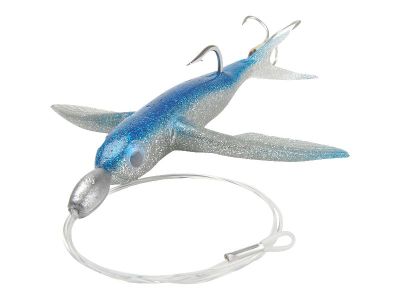
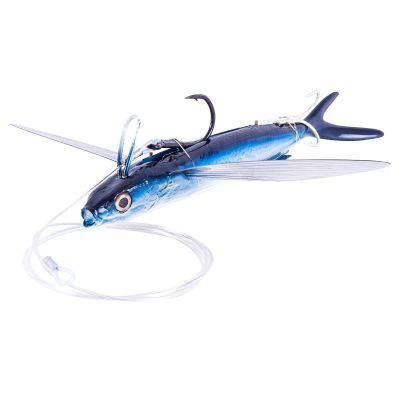
The evolution of rubber flyer evolved into the California Flyer, which might be the most exciting way out of all to troll for Bluefin Tuna. Captain Angler Jazz Moorehead took a common sense approach and developed the California Flyer to create a lure that our finicky Bluefin Tuna would not resist. He made an exact mold of a Pacific Flying Fish and designed a rigging technique that allowed the lure to slide up the line in the fight to allow for a proper hook set and not damage the lure. This lure has been a killer and a considerable cost saver for many top anglers. Fishermen that commonly use real flying fish for their kites now have the option to use the California Flyer as an alternative to a real flying fish. There’s nothing like the “Real McCoy,” but at $30 a piece, fresh frozen flying fish starts to get pretty expensive. Because the lure is so realistic, anglers can troll them with a kite set up at lower speeds. The presentation, as you can see above, is just fantastic.
The California Flyer is used in two predominant methods. One way is to locate a breezing school of Bluefin tuna. This will almost look like a wind spot that is out of place in the ocean. Often you can see fins sticking out of the water or the bellies of the fish reflecting off the sun’s rays. You’ll want to get diagonal to the school upwind and deploy your flyer with the kite. You’ll want to position your troll so that your flyer will intersect the front of the school. The second method this lure is effectively used is when an area of fish is loosely gathered and not really schooled up tightly. In this scenario, you’d troll it similarly to the rubber flyer but in lighter wind. This method is entertaining as you can really fish the lure. You can speed up, slow down, and do longer flights and jumps, and this variety in behavior sometimes makes the difference and creates a strike.
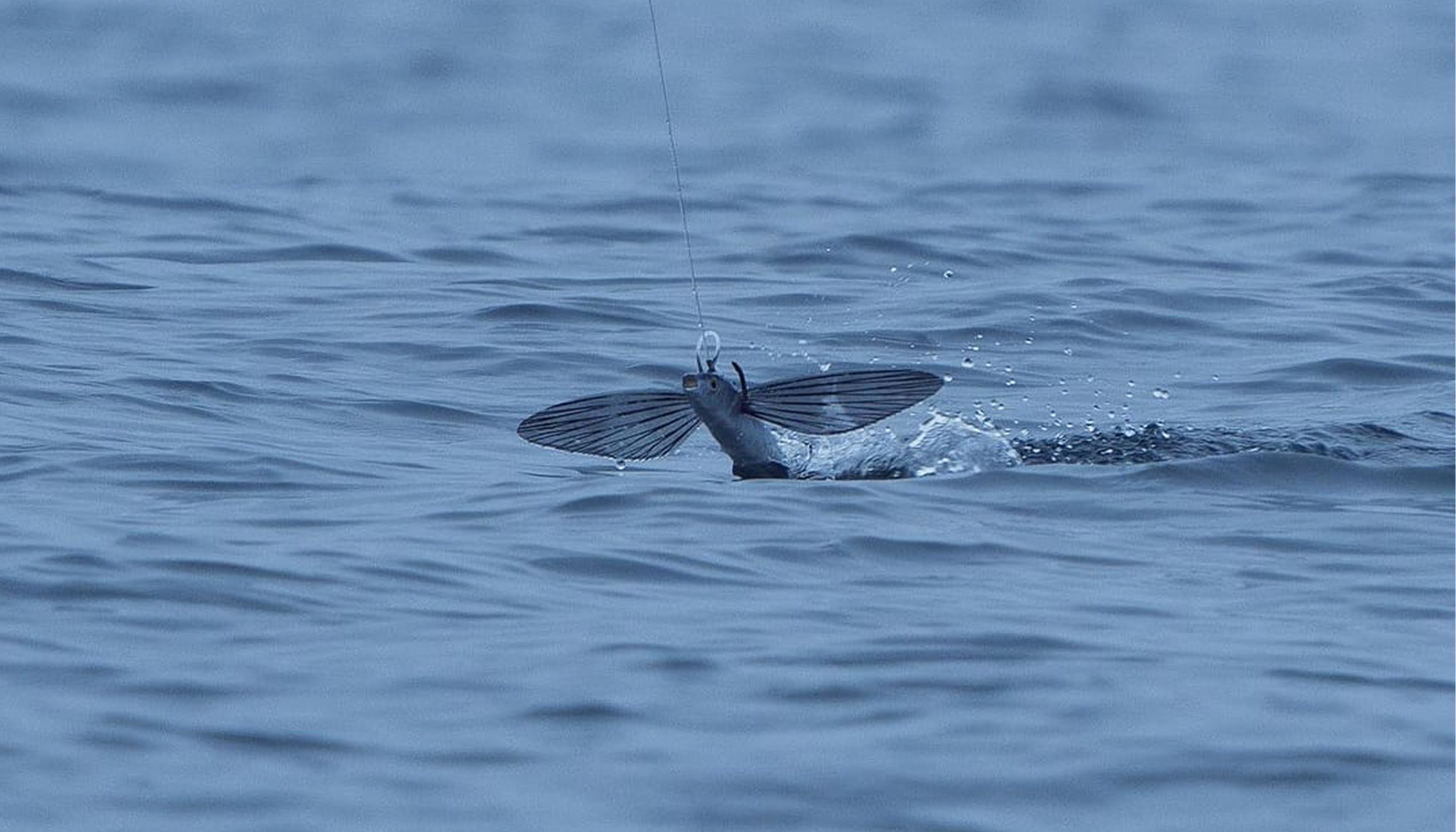
Trolling Speed: 2-8 Knots
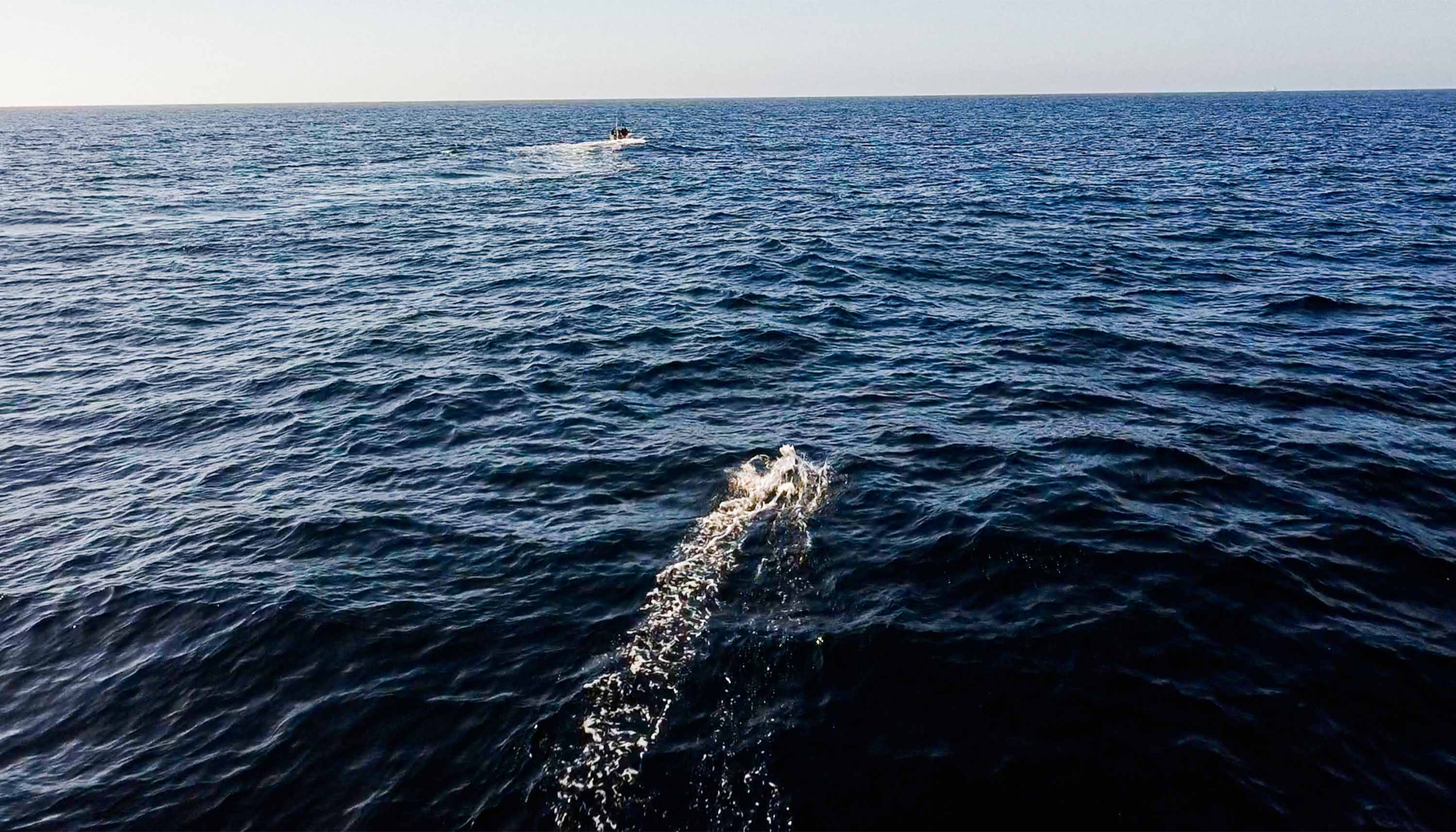
Distance From Boat: Bluefin tuna like to have this bait presented clear away from the prop wash and the boat. This means you’ll be fishing this lure far from the boat, 100+ yards away, using the wind to get it at a 45-degree angle out to the side of the boat. You should have one angler with stabilizing binoculars consistently watching the flyer. This is a great method when things are slow, you can calmly walk your lure right up to your school and often entice a bite.
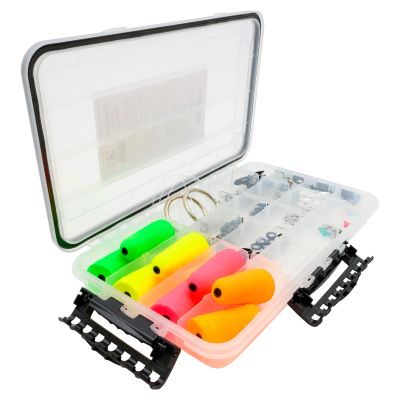
Rigging: The California Flyer comes with all necessary rigging items as well as replacement wings. On their website, they also have some great walk-throughs on rigging.
When To Use: When the wind is below 10mph, and you’re marking wolf packs of Bluefin in 50-100’ of water is the optimal time to use the flyer. When the Bluefin cruise at these depths, they are ready to explosively feed on flying fish as they spot them on the surface and rocket up from the depths.
-
-
-
-
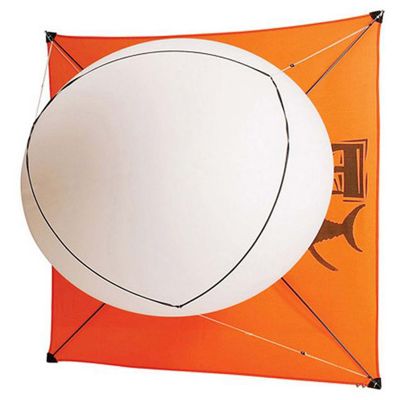 DNR - SeaQualizer Kite ThongsOut of stock
 -
Spreader Bar
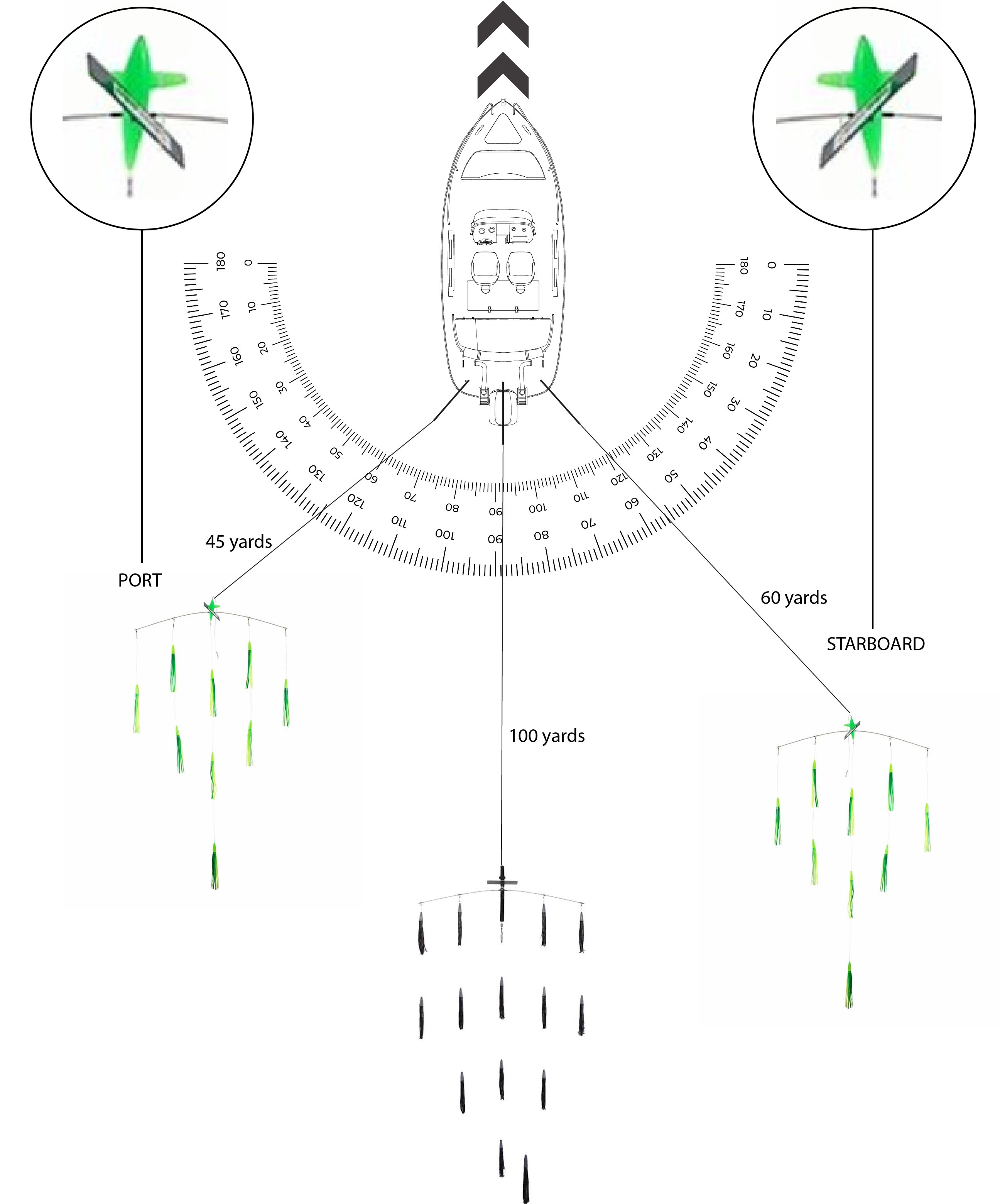
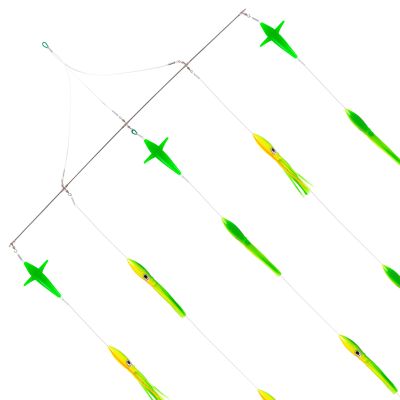
Fishermen have been targeting Bluefin Tuna for decades, anglers in Europe and the Northeast of the US have been targeting them for even longer than we have here in the West, and they’ve come up with their techniques and ingenuities, which have been proven successful. So, of course, as anglers looking to find more effective and new methods, we look to similar fisheries for inspiration, and we’ve done this with Bluefin. On the East Coast, anglers pursuing Bluefin have been successful with a spreader bar and a bird. This setup mimics a school of bait splashing and fleeing. In a sense, it’s the best of two worlds, and it is like using a popper and trolling a spread of lures simultaneously.
In recent years, anglers started adopting a spreader bar, hoping to find a more straightforward method than using a kite. Also, a great technique on low to no-wind days.
Trolling Speed: 4-8 Knots
Distance From Boat: I’ve heard east coast anglers question how we fish spreader bars on the west coast regarding the distance from the boat. They fish them relatively close on the east coast with success, but we’ve yet to experience this. Our spreader bars must be put way behind the boat, 100 yards or more. It’s unclear whether this is caused by the pressure these fish experience from commercial and everyday anglers, but they prefer to be far from our boats.
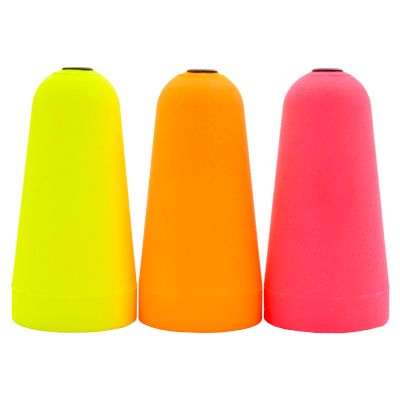
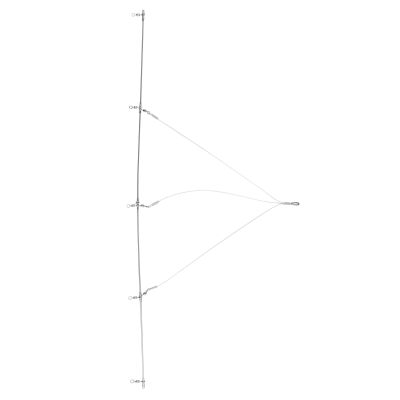
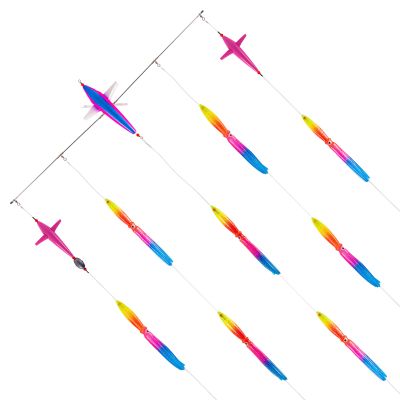
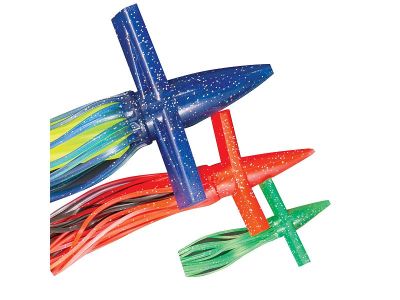
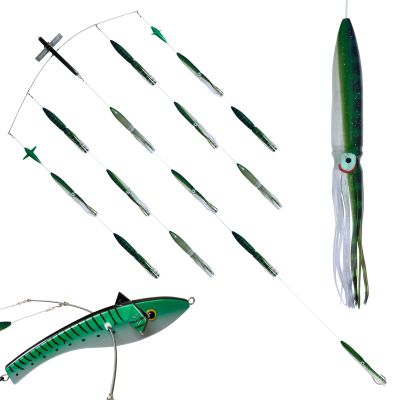
Rigging: The spreader bar comes set to go. You can experiment with the stinger lure, which will be the lure with the hook in it. Changing up the size, color, and length are all intricacies that can put you ahead of the rest when putting fish on the boat. Another critical item is the bird; some spreader bars come with a single, and some come with a single large and two smaller ones on the left and right spreader, which causes more splashing. In turn, it does make it harder to reel in your spreader.
Another essential mention in using spreader bars is that you can run three rods simultaneously. Down the middle, you’d use a regular spreader bar, while on the sides, you’d use a sidewinder spreader bar, meaning there are spreader bars produced to go to your PORT and STARBOARD sides specifically. This is accomplished with a keel on the bird, allowing you to make a wide track of lures when presenting your spreader bars.
When To Use: The spreader bar is especially useful on those glassy, no-wind days. The commotion they make is sure to get a tuna’s attention. As for when to use it regarding Bluefin behavior, it’s applicable at anytime. If schools are up and feeding, yet it’s hard to get close and cast a lure into a school, this is a great time to implement a spreader bar.
-
-
- Mold Craft Hooker Soft BirdsOut of stock
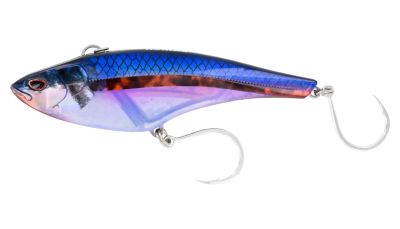
Lipless Hard Bait
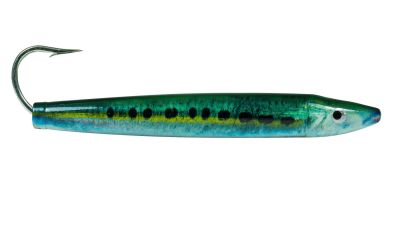
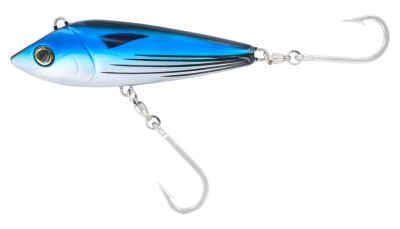
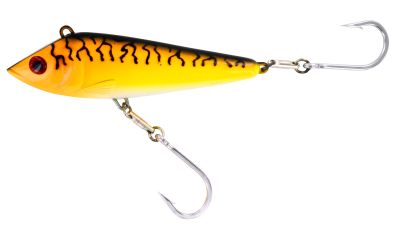
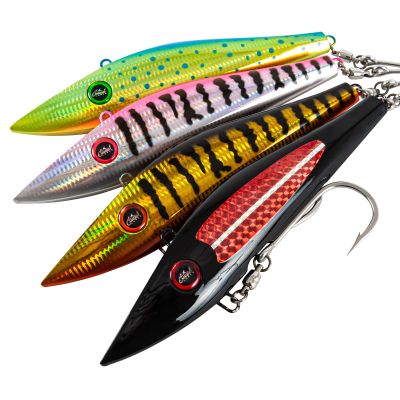
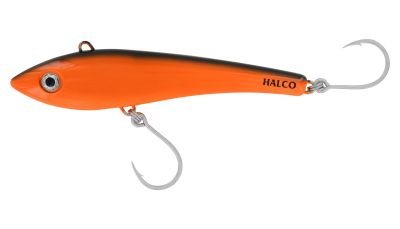
For the last several years we’ve been fortunate to have Bluefin Tuna in the Southern California Bight, and we’ve seen new methods of catching them almost yearly. 2022 was no different in this regard, and we have the charter captains out of Ensenada, Mexico to thank for this method, the latest and greatest method to catch Bluefin is trolling a high-speed lipless hard bait. While this style of lure is nothing new in the past it has normally been utilized for wahoo fishing. Never have we trolled marauder or diving-style lures at high speed for Bluefin Tuna. The speed at which anglers have gotten hookups has been astonishing, with some going as fast as 20mph. Sooner than later, the word got across the border, and many state-side anglers duplicated this tactic with incredible success. In addition, it proved to be an excellent method to cover significant water. Depending on your boat, this method proved ideal for gas consumption or just about the worst. On my boat, a 22’ Kencraft with a 300HP engine, this method puts me in about the worst speed for gas consumption, opting me to use it as a last resort, but it is undoubtedly deadly on some days. Trolling this style of lure is the most user-friendly method to targeting Bluefin, and it’s up there with the Cedar plug-in technicality. Some anglers now found themselves annoyed with this method as it takes less skill and if trolled through crowded areas and it can be disturbing. Regardless of the verdict, it is one of the most productive methods to date.
Trolling Speed: 10-20 Knots
Distance From Boat: Again, Bluefin tends to like being far away from boats. Most anglers have been running these lures a fair distance from the boat, at least 100’. Having them out of a significant space is also necessary to remain in the water at these speeds.
Rigging: Bluefin tuna have tiny sharp teeth capable of cutting through fishing line. Trolling at high speed and susceptibility to teeth will ensure you’ll want to use a substantial leader. A fluorocarbon leader of 130-200lb. test should be ideal. It does not need to be long but needs to be sufficient to avoid getting nicked by the Bluefin’s sharp teeth on your main line.
When To Use: This method has proven to be highly successful on Bluefin and basically works anytime. It is highly recommended that you utilize this method when there are few to no boats fishing in a particular area. You want to avoid being the angler racing around at high speeds trolling through the local fleet.
-
-
-
 Magbay Magtrak LuresOut of stock
 -
Thinking Outside The Box
Going into the summer of 2023 we have yet to see what new methods we’ll be experimenting with this year. We encourage you to think outside the box to target these Bluefin. There seems to be a correlation to success based on presenting these fish with something they have not seen before. Do not hesitate to look at different locations targeting the same species & techniques to target completely different species as inspiration. Below are a couple of techniques that come to mind yet have not been proven here in Southern California.
Green Sticking
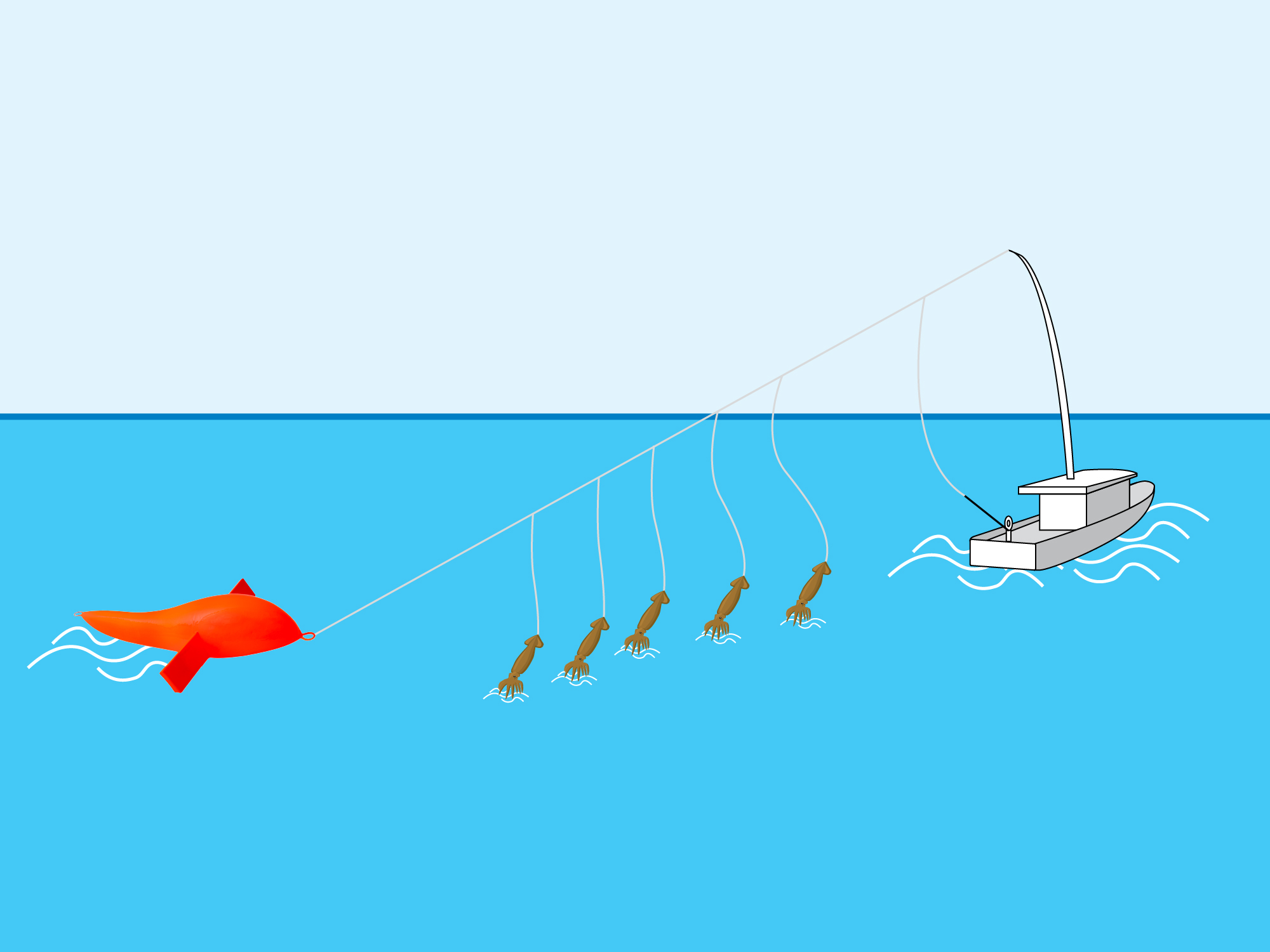
Green sticking is a method used on the East Coast and common for Bluefin tuna from North Carolina. Instead of using a kite, the angler would use an extremely long trolling rod that acts like a vertical outrigger. It has one line with several clips attached to a fishing rod on the boat. The idea is to resemble a school of bait with several lines deployed simultaneously.
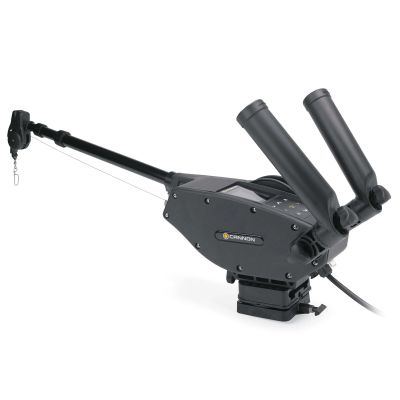
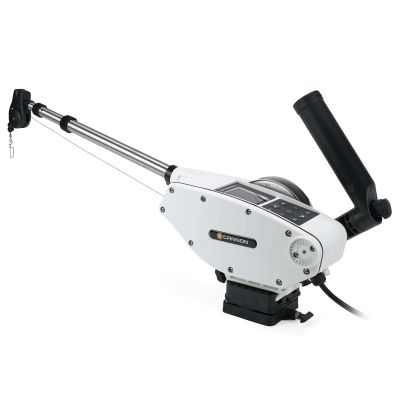
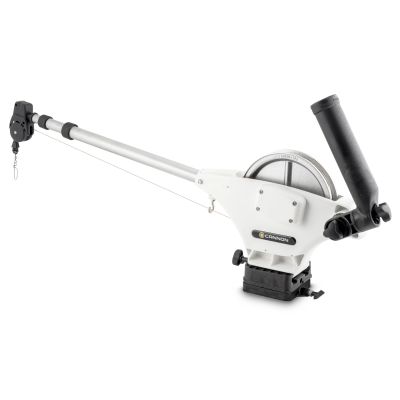
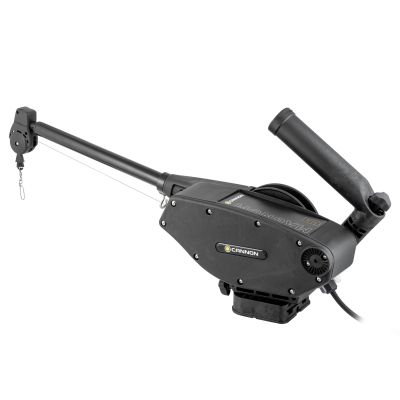
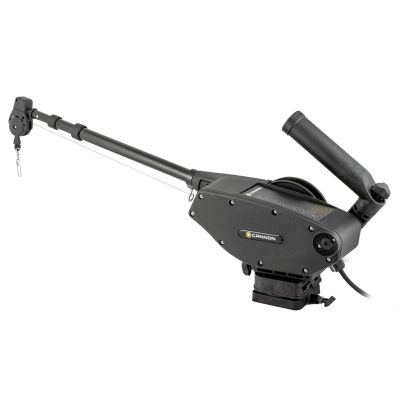
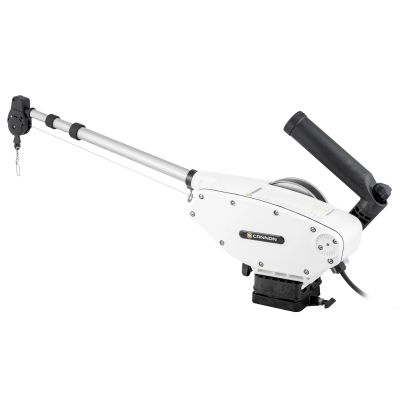
Downriggers
In the last couple of years, even the coastal areas of central and northern California have had a shot at Bluefin, as their migration has sometimes taken them as far as San Francisco. In those areas, some anglers have applied some of their local salmon methods to this fishery by utilizing downriggers to present bait. This has been virtually unexplored in the Southern California Bight and could be an excellent new application method.
Soft Plastics
Taking a note from the East Coast, soft plastics have been added to their repertoire for Bluefin Tuna. When speaking of plastics, we’re talking about larger soft plastics rigged with rugged hooks to properly land these more significant grades of fish. Brands like RonZ Lures and Hogy are East Coast manufacturers producing these lures. Take a try at slow trolling these fish way behind the boat. When Bluefin are present, you might be pleasantly surprised.
Etiquette
Lastly, when discussing trolling it’s necessary to bring up the topic of etiquette. Make sure you read your surroundings. If you see a fleet of boats drifting in an area it may not be the best opportunity to troll through that area. Additionally, keep track of where your lures are. If you're trolling 100 yards or more behind your boat make sure to stay far away from other boats that are fishing.